The Slave Cabins at Magnolia Plantation


Magnolia
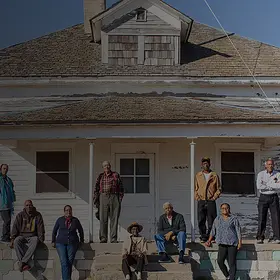
Five slave cabins at Magnolia Plantation were restored.

Credit: Matthew Pelz, Southern Office
 

All of the Above

In designing a new interpretive program, one of the biggest steps is determining the most important historic period of the site. Usually, this determination comes through research and analysis and helps guide the decision-making process for all aspects of the project. For example, what is the period of significance for slave cabins inhabited through the 19th and 20th centuries on a historic property dating to 1670?

a. Antebellum - slave cabins

b. Reconstruction era - Freedmen's homes

c. Early 20th century - gardener's homes

d. Civil Rights era - family dwellings

The leaders of Magnolia Plantation in Charleston, South Carolina, facing this very situation, captured the attention of the community when they answered, "e. All of the above."

In February 2009, Magnolia, unveiled a new project, "From Slavery to Freedom," led by Craig Hadley of The Living History Group, aiming to provide a fresh interpretation of the issues of slavery. What makes the project unique is its approach to the selection of the period of significance. Five cabins are individually restored to represent various eras throughout the site's history.

  • The first cabin is restored to its original 1850 appearance to represent the era of slavery
  • The second is stabilized and preserved as the home of a laborer on Magnolia's grounds c. 1930
  • The third is restored to its condition during the residence of the Leech family during the 1960s, relying on testimony from living members of the family
  • The fourth is restored as an 1870s Freedman's cabin.
  • The fifth is restored to its original 1900 appearance.

Hadley and Magnolia determined that the significance is not tied to any particular period, but to the evolution of the African-American experience. Each cabin has artifacts, equipment, or decorations in accordance with the era it represents. As tours proceed from one cabin to the next, visitors learn about a different chapter in history.

Magnolia
Newspapers cover the walls of the Cabin B.

Credit: Matthew Pelz, Southern Office

While the premise is provocative and original, the configuration of the buildings is not conducive to its most effective presentation as a narrative. Ideally, a program with a focus on the transition would operate chronologically, beginning with the era of slavery and progressing into and through the 20th century. Given the conditions of the structures, such a program at Magnolia would require either a restoration scheme with less priority material evidence or a weaving tour route with guides leading followers back and forth across the slave row.

Furthermore, the idea of an evolving significance is not immune to the same debates surrounding other preservation efforts. In any project on a historic site as popular as Magnolia, members of the community are justified in questioning the priorities of Hadley and Magnolia's leaders. Even in their "all of the above" efforts of representing significance, project managers were limited by the number of structures available to illustrate different eras. In the end, they chose not to recognize the most recent period, even though the fifth cabin was inhabited until 1999. While the distinction between the cabins conditions in the 1960s and 1999 may not seem fascinating to visitors in 2009, those of future generations might be more interested to learn about the lifestyle of Magnolia slave row's last resident.

Magnolia
Cabin E at Magnolia Plantation in Charleston, SC was restored in 2009 as part of the "From Freedom to Slavery" Program.

Credit: Matthew Pelz, Southern Office

As part of the three noted plantations on Ashley River Road (also including Middleton Place and Drayton Hall), Magnolia is known for its historic gardens. Its success as a tourist destination began as early as the 1870s and is due in large part to the reputation of its garden tour program. In the absence of a program interpreting the slave cabins, they were supplementary. With the new project, that role is changing as the cabins are the focus of new interpretive and educational programs. More than the specific decisions Hadley and his team made, the ultimate success of the project will be determined by the extent to which it engages the community and emphasizes the value of the slave cabins as cultural resources. 

Powered by Convio
nonprofit software