Preservation Green Lab

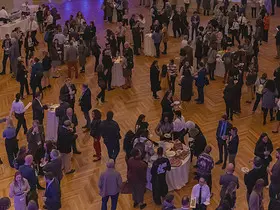
The National Trust for Historic Preservation launched its Preservation Green Lab on March 25, 2009, in Seattle, WA. The work of the new field office will focus on preserving older and historic buildings sustainably, as well as supporting the broader goal of fighting climate change. Click here to view photos from the official launch event.
Why do we need a Preservation Green Lab?
There's a lot of buzz these days about global warming and the worsening climate crisis, but did you know that it's not just gas-guzzling cars that are to blame? An astounding 43% of our nation's carbon emissions originate from the operation of the buildings that we live and work in. Even worse? Factoring in the environmental impact of the construction (and perhaps future demolition) of those buildings bumps that percentage even higher.
In recent years, state and local governments across the country have adopted much-needed climate action plans outlining strategies for countering the growing threat of global warming. These plans typically identify goals for preserving open space, increasing the use of mass transit, enhancing recycling activities and promoting the greening of new construction projects. However, despite the grim statistics noted above, few of these action plans offer strategies for greening our country's existing building stock, and even fewer – if any – identify the important role that building reuse plays in curbing carbon emissions.
What will the Preservation Green Lab do?
Sometimes the best way to teach is to lead by example.
In its day-to-day work, the Preservation Green Lab will coordinate demonstration projects and provide technical assistance and model policies – all in an effort to encourage municipalities and states around the country to fully consider historic preservation and the existing building stock in formulating their climate change action plans. As a key component of the National Trust for Historic Preservation's Sustainability Program, the Preservation Green Lab will focus on these three goals:
Good Policy, Green Results: The greenest building is often the one that is already built, which is precisely why the Preservation Green Lab will work in various cities and states to develop and implement policies that support green retrofits and adaptive reuse, as well as reinvestment in existing communities.
Greening by Example: To demonstrate that older and historic buildings can, in fact, be retrofitted to achieve high levels of energy efficiency, the Preservation Green Lab will launch a number of green retrofit projects in pilot cities across the country.
The Go-To for Going Green: The Preservation Green Lab will lead the conversation on best practices and model policies for greening our country's prized older and historic buildings, functioning as the go-to resource for those navigating the intersection of historic preservation and sustainability.
Support for the Preservation Green Lab was made possible by the City of Seattle, the Kresge Foundation, the Bullitt Foundation, the Charles Evans Hughes Foundation, the Goodfellow Fund, 4Culture, and Mr. and Mrs. Kevin Daniels.
Where will the Preservation Green Lab work?
Headquartered in Seattle, the Preservation Green Lab will partner with selected cities and states in its efforts to become a national clearinghouse for best practices and model policies. Seattle, San Francisco and Dubuque have agreed to be the Preservation Green Lab's first pilot cities, and additional cities are already being considered for future projects and partnerships.
Want to know more about the people behind the Preservation Green Lab? Check out our new Q&A interview series, and come back often as we add more profiles.
Preservation Green Lab in the News
Speak out! How could your city or state be more green?
Historic preservation and sustainability go hand-in-hand. That's the conversation we need to have time and time again with the people who are making important decisions in our cities and states. Join in by leaving a comment below with your thoughts and ideas about how things could be greener – and at the same time more historic – in your neck of the woods.


Submitted by Anonymous at: August 31, 2009
We would love to be involved in the conversation/ projects! From Philadelphia Fredda Lippes Office of Sustainabilty - Philadelphia Fredda.Lippes@Phila.Gov
Submitted by greenhotline at: June 9, 2009
The Green Building Hotline will be following these examples very closely to help the residents of the Portland Metro Area, Oregon. www.buildgreen411.com Existing housing stock desperately needs to be upgraded sustainably and preserved for our future. Thanks!
Submitted by redwoodempire at: April 24, 2009
We need literature for green preservation of historic residential structures for tabling events. It would be great if the National Trust could provide brochures with a quick top 10 dos and don'ts when attempting to make a historic home more energy efficient. Hoping such an item will be for sale soon.
Submitted by CSH at: April 20, 2009
In response to Michael's comment (4/14/09), in New York City, attached photovoltaic panels, wind turbines and the like would be treated as "mechanical equipment" as defined by and subject to the city's Landmarks Preservation Commission Rules. For example, depending on the context, the equipment could be "minimally visible" from a public thoroughfare and still get approved at staff level with a simple permit. Drawings, specs and a mock-up would be required in most cases. Keep in mind, however, that in NYC you are often dealing with flat roofs on rowhouses as installation locations, as opposed to freestanding houses with pitched roofs that have high visibility in many less urban historic districts.
Submitted by Kitty at: April 15, 2009
An old house in Montgomery, AL recently won a 2008 Beyond Green Sustainability Award. The redo attempted to use/keep the best of the old and add green tech such as geothermal. No one at the National Trust has been the slightest bit interested despite repeated attempts to contact. Why should I be interested in Seattle when my community has been left out?
Submitted by Michael at: April 14, 2009
This forum may not be the place to pose this question, but I would like to know how other communities have adapted their building codes, zoning ordinances and historic standards to accommodate modern energy saving technology like solar panels and wind mills. Thanks!
Submitted by Energize Clinton County at: April 14, 2009
What an awesome initiative! If you're looking for a small town model, we'd love to participate. Energize Clinton County (http://energizecc.com) is currently working with the Clinton County Regional Planning Commission on developing a local ordinance to designate Wilmington (and its historic district) as a Green Enterprise Zone. This initial ordinance will be just a first step, and we'd love to work with the Preservation Green Lab to continue to develop best policies and policies targeted to America's smaller, rural communities.
Submitted by Courtney at: March 31, 2009
How can I find out if my city is eligible for a partnership in this effort?