National Park Service to Move Alexander Hamilton's House


Hamilton Grange
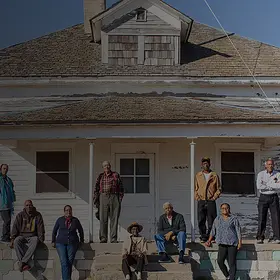
Alexander Hamilton lived at this New York City address from 1802 until 1804; the house will soon be moved.

Credit: National Park Service

The National Park Service, which has owned the New York City home of Alexander Hamilton since 1962, has decided to to move the Grange, where one of America's first constitutional lawyers, the founder of the Bank of New York and the New York Post, and the first United States Secretary of Treasury lived from 1802-1804.

The Greek revival house, designated a National Historical Landmark in 1960, was built in 1802 on a promontory that provided panoramic views. Designed by John McComb Jr., who designed New York's City Hall and Princeton Theological Seminary, the 1802 Grange is the only remaining example of his residential buildings. 

The relocation process began in 1995, when the park service concluded a General Management Plan that recommended that the Grange be relocated and restored in the northwest corner of St. Nicholas Park on land that had been part of Hamilton's original 32-acre estate. Planning for the project began in 2004, construction began in November 2007, and the building is expected to be completed in Spring 2009. The actual move is estimated to take approximately 12-15 days, and Congress has predicted that it will cost about $8.2 million.

The National Park Service's decision to relocate Hamilton Grange has the support of city organizations like the Department of Parks and Recreation and the New York City Landmarks Preservation Commission. According to Darren Boch, National Park Service spokesman, "The NPS developed plans for the building's relocation, keeping in mind National Register Guidelines for relocating structures: that 'every effort be made to re-establish historic orientation, immediate setting, and general environment,' as well as accurately restore the Grange's architecture in a manner that respected the symmetrical exterior elevations."

Regardless of ongoing progress on the project, however, others are adamantly opposed to the relocation, which will reorient the house on a busy street.

"Alexander Hamilton designed the Grange to face southwest, toward the sun, toward the city, and the complete turnabout of his solar orientation casts into shadow the originally designed mirrored panels ... and turns it to face a noisy, heavily trafficked street. It's just bizarre," says Carolyn Kent, a local preservationist. "When you reverse it, you have the dining room with the mirrored panels facing right into a wall."

Says Boch, "Some individuals have expressed their strong conviction in siting the Grange in its original compass orientation, facing southwest, as paramount to other considerations."

According to Kent, five community groups have contacted the National Park Service's Northeast regional director to challenge the plan now under way. "This is not just a few individuals," Kent says. "The orientation now scheduled completely contradicts that put forward by NPS in the final general management plan published in 1995."

Subscribe to the Today's News RSS feed

Comments

Nickname
Comment
Enter this word: Change


Submitted by Nick at: June 26, 2008
The architectural style of The Grange is more accurately described as Federal Style.

Submitted by Chris in Queens at: June 25, 2008
Lets be honest, there is no where you can really put it these days that will resemble anything it used to, regardless of where it faces. I drove past the place it used to be yesterday and gasped when I did not see it there. I thought maybe they moved it up to Westchester county or something ridiculous like that. I'm just thankful it is still on his former property. With the way New York City grows, I still have a hard time believing its here.

Submitted by Chris in Yonkers at: June 9, 2008
In response to Angry Resident, Hamilton Grange hasn't been in its current location since 1802. It was originally about a block away and was moved to its Convent Avenue location in the 1890s when the new streets were being laid out. The only alternative at the time was demolition since it was in the way of the new street layout. It was used as a rectory and parish house for St. Luke's for many years, and then turned over to the City, which turned it over to the Park Service in 1962. I am not thrilled by the current move. I wish the house was going to be oriented the same way it was originally, and I find that often when buildings are "restored" they actually have less of a sense of their history than they did before restoration. However, I also realize that all attempts to run it as a museum at its current location have failed. It's a tough problem to deal with.

Submitted by Patty B at: May 28, 2008
I think it good that they can move the house to be in a park, instead of boxed in by buildings. But it should be turned the direction that the house was build to face.

Submitted by Angry Resident at: May 27, 2008
Why would you move it, it has been there since 1802?!! Since i was a child i would walk past this place and admire it, now nothing will be there. THIS MAKES NO SENSE!!!! Placing it on 141st street would put it at great risk for damage as cars are always speeding down the hill, there could be an accident. I do not understand why they chose to ruin something that was in such a great location. Why was the neighborhood informed earlier. I just saw it on the news as it was being moved, the plans for thiswere not televised in 1995!


Powered by Convio