Block by Block

A dogged group of Detroiters is fighting to redefine their city and its future

Michigan
Businesses flourishing along Michigan Avenue in Corktown include O’Connor Real Estate and Development and the adjacent Slows Bar BQ. Owners Ryan and Phil Cooley recently purchased two more buildings down the block and hope to open an entertainment venue there.

Credit: Kevin J. Miyazaki

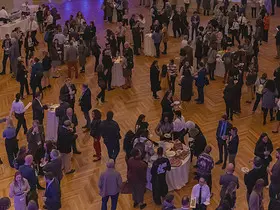
In February, Susan Mosey and a cadre of indefatigable Detroit residents gathered for a fundraiser at a historic bowling alley downtown. Meeting within earshot of the Garden Bowl's crashing pins and techno rock were dozens of the city's biggest believers—visionaries who look at abandoned warehouses and see glittering loft apartments, dreamers who drive past weed-choked lots and imagine busy playgrounds. These residents live, eat, and shop downtown despite urban blight, homelessness, high crime, and the absence of major grocery stores. They lead the cheers for the city when so many others offer only boos.

Mosey has an apartment and works nearby in Midtown, a thriving neighborhood anchored by Wayne State University, the Detroit Medical Center, and most of the Motor City's cultural institutions. Often called the district's unofficial mayor (she's president of the University Cultural Center Association, which works to develop and improve the neighborhood), she gestures proudly to the crowd. "These are all the people who actually do the work," she says. They saved neighborhoods such as Midtown and inner-city Corktown, predicted to die after the Tigers left Tiger Stadium in 1999. They helped rescue historic Brush Park, renovating 1870s mansions so that they no longer provide an enticing backdrop for out-of-town photographers looking to contrast crumbling relics against gleaming glass towers. "These are the people responsible for Detroit's transformation," Mosey says.

Locals like to say that when the country catches a cold, Detroit gets the flu. The city ranks near the top nationally in unemployment, home foreclosures, and crime—as well as in magazine and website rankings of the unhealthiest, fattest, or least livable places (though Detroit gave up the laurels as Forbes.com's "most miserable city" in this year's survey; thank you, Stockton, Calif.).

Automakers and suppliers, vital employers here, face an uncertain future. Thousands of abandoned homes and buildings—estimates range from 60,000 to 85,000—dot the city. And last season the metropolis once dubbed The City of Champions, watched its NFL Lions fumble their way to an 0-16 record, the first time that's ever happened in the league.

Reasons for Optimism

A two-year movement by the Detroit Metro Convention & Visitors Bureau to encourage local companies to hold their meetings and employee retreats in the city netted an additional 20 meetings and an estimated $13.5 million in local spending.

The 43-acre business incubator, TechTown at Wayne State University, looks ready to hatch the next generation of growth industries for Detroit. It is home to alternative and renewable fuel research as well as cutting-edge research services for drug-discovery scientists.

Michigan has instituted a generous tax incentive package for Hollywood. Several recent films were shot in the city, and a vacant building that once housed a temporary casino will be transformed into an $86 million digital animation and visual effects studio.

Yet despite a fourth-and-long outlook, there are just as many—if not more—reasons to be hopeful.

At the top of the list is the recent $200 million renovation and reopening of the 1924 Book Cadillac Hotel. Shuttered since the early 1980s, it stood downtown—along with the still-abandoned train station—as a symbol of Detroit's downfall. Now it is often held up as Reason #1 to believe in the city's comeback. Listed on the National Register of Historic Places, the Italian Renaissance-style hotel has more than 60 luxury apartments on the upper floors and elaborate public spaces below. "All of us hope that this will encourage more responsible renovations in the immediate area," says Karen Nagher, executive director of Preservation Wayne (which will change its name to Preservation Detroit later this year). "There is enormous potential for the adjacent buildings and streets clustered nearby, and this restoration can drive more successes."

Around the same time the Book Cadillac opened, another shuttered hotel on the National Register was reborn. The Fort Shelby, originally opened in 1917, was restored and reopened late last year. "With the addition of almost 2,000 new luxury hotel rooms to our downtown inventory, Detroit is now in a position to compete for business that we didn't have the capacity to handle before," says Larry Alexander, president and CEO of the Detroit Metro Convention & Visitors Bureau. "This levels the playing field for Detroit against some of our key competitive cities in the Midwest, such as Cleveland and Chicago."

This is an excerpt from Preservation magazine.

Like what you see? Subscribe to Preservation and explore the mystery and meaning of our most beloved places through in-depth features and vibrant photography.


Comments

Nickname
Comment
Enter this word: Change


Submitted by JenR at: May 7, 2009
Outstanding article. Thanks, Dan Shine, for this moving story. I hope the city is able to save the train station before it is too late. Gratitude for everyone that is working together to make things happen.

Submitted by Jen at: May 5, 2009
We must save the train station! As my neighbor, Tom Page, stated in the Detroit News, "If Rome had Detroit's City Council, they would have torn down the Coliseum."

Submitted by faith at: April 28, 2009
Downtown Detroit is ripe for major shopping with a large middle class living Downtown lafayette park, Midtown, New Center, Indian village Wayne State University area, etc. I am tired of Detroit being labor black and poor this is not true. We shop at Fair lane Northland, Eastland,and Oakland malls lets keep some of the money home. We still have a very large diverse population with disposable income.


Powered by Convio
nonprofit software