Connecticut Inn Agrees To Restore 1780s House

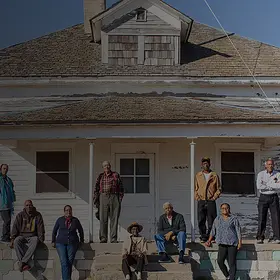
Grumman-St.
Grumman-St. John House, Norwalk, Conn.

Credit: Norwalk Preservation Trust


A long-neglected house in Norwalk, Conn., will be restored, thanks to a settlement agreement signed last month.

The Norwalk Inn and Conference Center, which has owned the adjacent c. 1780 Grumman-St. John House since 2001, applied for a demolition permit in 2006, hoping to expand its non-historic inn, but a judge granted a temporary injunction against demolition in 2008.

After years of litigation, the inn agreed to a settlement on August 12, and committed to restore the structure, part of the city’s National Register-listed Norwalk Green Historic District. Locals have been concerned about the run-down house's condition for almost a decade, says Tod Bryant, president of the Norwalk Preservation Trust, which filed a lawsuit under the state environmental protection act four years ago.

The Legal Battle

The lawsuit leading to the settlement was brought to enforce Connecticut’s strong preservation law, which requires adopting "feasible and prudent" alternatives to avoid harming historic properties. But the litigation was not for the faint of heart. The case required nine grueling days of testimony over the holidays in 2006-2007, and then a one-year wait before the injunction was issued, followed by a series of later hearings to enforce compliance with the court's order. The Connecticut Attorney General intervened on behalf of the State Historic Preservation Office, and the National Trust and the Connecticut Trust filed an amicus brief. "It was a tremendous team effort, and the role of the attorney general's office was especially heroic in getting to this point," said Elizabeth Merritt, the trust's deputy general counsel. "We are delighted by this outcome."


"I was excited and relieved at the same time," says Bryant, who formed his group in 2001 in response to the threat to the Grumman-St. John House. "There were so many other people in Norwalk and around the state who were interested and who stepped up to this battle."

Two of those people—a state senator and a state representative—were particularly influential in crafting a compromise. In the past year, Senator Bob Duff (D-Norwalk) and Representative Lawrence Cafero (R-Norwalk), met with inn officials to discuss alternatives to demolition.

"This was truly a situation where, by getting everyone to sit down together, we were able to work out a plan that is mutually beneficial to everyone involved," Senator Duff said in a statement.

Under the agreement, the Norwalk Inn will be able to add a third floor and 37 rooms (a solution that required special zoning approvals), and the Grumman-St. John house will be restored as extended-stay hotel rooms.

Restoration should begin next year, after zoning approvals are granted, says inn spokesman Peter Handrinos. "We want to go on with our lives. We felt it was a pretty good compromise, one that allows most everyone to get a better deal than the status quo. The status quo was bad for everybody."

Samuel Grumman built the post-and-beam house during the Revolutionary War. The British burned most of it down in 1779, but it was rebuilt during the 1780s.

"The agreement not only saves the house but improves the look of the inn itself," Bryant says. "The entire neighborhood is going to be the beneficiary."

For more photos, stories, and tips, subscribe to the print edition of Preservation magazine.

Subscribe to the Today's News RSS feed

Comments

Submitted by Brian at: September 3, 2010
I can't believe somebody would consider demolishing a structure which was set on fire by British troops during the Revolutionary War.


Powered by Convio
nonprofit software