Glamour in Tulsa
The 1925 Mayo Hotel Is Back.
By Lindsey M. Roberts | Online Only | Nov. 30, 2009
If you'd walked by the Mayo Hotel in Tulsa, Okla., just a few years ago, you'd have seen nothing more than an empty building, visited on occasion by flocks of pigeons. Once the tallest building in Tulsa and a glittering destination in the boom years of the 1920s, the Mayo closed in 1981 as the "Oil Capital of the World" moved from boom to bust. "Tulsa died, and the Mayo died with it," says Macy Snyder, hotel spokeswoman and daughter of the current owners.
After a disastrous rehabilitation effort in the '80s that stripped the building of its marble columns, marble stairs, and other architectural ornaments, the Snyder family bought the building in 2001 for $250,000—then the going price for a parking lot in downtown Tulsa. Nine years and $40 million later, the Snyders have finished a striking comprehensive renovation. The hotel, already open to guests, will celebrate its grand opening this week.
"The Mayo is a huge deal," Macy Snyder says. "[This renovation] is probably the best thing that could have happened for downtown Tulsa."
The city pitched in to save the Mayo. Voters provided $4.9 million in public funds as part of Vision 2025, a development package designed to grow Tulsa's economic and community infrastructure. The Snyders also used federal and state historic tax credits to complete the project. "It means everything for downtown Tulsa's revitalization," says Lee Anne Zeigler, executive director and CEO of the Tulsa Foundation for Architecture.
The Talk of Tulsa
Tulsa's heyday began in 1901, when oil was discovered in Red Fork, a community to the southwest of Tulsa. Four years later, the largest oil strike of the era was made in Tulsa County.
Brothers Cass A. Mayo and John D. Mayo moved from Missouri to Tulsa and built the Mayo Hotel in 1925. Architect George Winkler designed the 18-story structure, clearly inspired by Louis Sullivan's Wainwright Building in St. Louis. The Mayo's false terra cotta balconies visually organize the building into vertical rows, giving the illusion of columns of windows.
The Mayo Hotel opened in 1925 and sat vacant for more than two decades before being restored in 2009.
Credit: Mayo Hotel
When it first opened, the Mayo had 600 rooms, ceiling fans in each room, and Tulsa's first running ice water. Oilman J. Paul Getty made the hotel his home, and other notables traipsed through: Babe Ruth, Charles Lindbergh, Mae West, and John F. Kennedy, among others. John D. Mayo's family lived in the hotel from 1941 until Mayo's death in 1972. Most Tulsa residents have memories of weddings, proms, and bar and bat mitzvahs at the hotel.
"Like so many Tulsans, important events in my family's life took place at The Mayo," says Marcia Mayo, granddaughter of Cass A. Mayo, who remembers her sister's wedding rehearsal in one of the grand event rooms. Mayo currently serves on the National Trust for Historic Preservation's Board of Trustees.
News from Tulsa
Tulsa, Okla., hosted the 2008 National Preservation Conference, and soon after, The Kanbar Charitable Foundation donated $50,000 to the National Trust toward a survey of the urban core. The survey, completed in September, noted the potential for 14 historic districts in Tulsa, including Brady's Art District, which has galleries, a theater, ballroom, and restaurants. Tulsa is currently in the process of nominating these districts to the National Register of Historic Places. "Anybody who attended the Tulsa conference should make a repeat visit to Tulsa and see what great progress is ongoing," says Jonathan Poston, director of the Trust's Southwest Office.
Clues to the Past
When the Snyders took title to the hotel nine years ago, they had few clues about how to proceed. Almost three decades of vacancy (and the destructive 1980s salvage work) had taken their toll. "We didn't have anything to go with besides photos, and they were in black and white," Snyder says.
The family turned to the National Park Service for guidance, and also looked to Margery Mayo, John Mayo's daughter, then in her nineties. (Snyder says Mayo remembered every detail of her father's hotel.) Their advice and memories proved invaluable when crews began restoring period interiors.
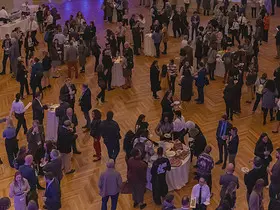
First, workers placed new marble on the grand staircase and renovated the lobby. Next they replicated the Crystal Ballroom on the 18th floor. "Enough of the ballroom was intact that we could tell what it looked like," Snyder says, including original chandeliers, which managed to survive the salvage rampage of the '80s. Upper floors were turned into 76 apartments, while lower floors now hold 102 hotel rooms. In one of the most visible indications of Tulsa's comeback, the original red Mayo sign atop the building was refurbished; it's now lighted again and glows in the nighttime sky.
The hotel's disappearance "would have been a very sad day for me personally," says Marcia Mayo, "but most of all, a terrible loss for the city and a defeat for historic preservation. I'm grateful to John Snyder and his family for having saved the hotel and returned it to the civic life of the city."
The Mayo was listed on the National Register of Historic Places in 1980, and the reopened hotel is now a member of Historic Hotels of America, a program of the National Trust. This October, the Tulsa Architecture Foundation recognized the Mayo with its annual Foundation Landmark Award. "The Mayo was one of the pioneers early in Tulsa's history, and now [is once again a pioneer] in its revitalization," Zeigler says.
For more photos, stories, and tips, subscribe to the print edition of Preservation magazine.
Subscribe to the Today's News RSS feed
Comments


Submitted by John D Mayo at: September 15, 2010
Nice to know I have a hotel named after me.Just kidding,would like to visit soon. John Dwain Mayo.
Submitted by windy at: February 20, 2010
So very glad to hear the Mayo's been restored!
Submitted by Old Main's Ghost at: December 31, 2009
This is wonderful news! I'm glad the Snyder family saved this magnificent building.
Submitted by Janice at: December 14, 2009
M family lived in Tulsa in the 60's when my Dad worked at Sinclair Oil. I am thrilled that the city has hung onto one of its great architectural treasures. We should all celebrate the efforts of those folks who work hard to preserve our past.
Submitted by Cyndie at: December 11, 2009
Hooray! I lived in Tulsa in the 1940s and 50s when it, indeed, was the Oil Capital of the World. My mother and I took the bus on 11th Street downtown to shop, and she took me with her to the bank. I remember thinking the Mayo was the most beautiful building I'd ever seen as a young child. Blessings to the Snyders.
Submitted by Anonymous at: December 3, 2009
Ballroom is on the 16th floor