John Stanford International School, Latona Campus

The John Stanford International School, Latona Campus serves as an outstanding model for the role historic neighborhood schools can play in bridging the past with the future. The landmark school served as a vital neighborhood center throughout the 20th century as Seattle was transformed from a gold rush boomtown at the beginning of the century to an international metropolitan hub in the 1990`s. The schools` restoration encompassed the revitalization of both the historic building as well as the educational program. Today`s curriculum focuses on international studies including technological linkages with the University of Washington along with schools in Japan and Mexico.

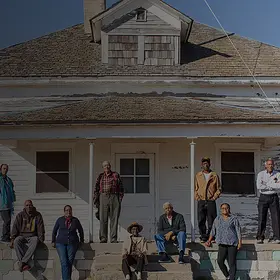
The landmark school was built in 1906 as one of nineteen wood frame schoolhouses based on a "model plan". James Stephen, the designer for Latona, was the Seattle School District architect from 1903-1909. His projects for the District included eleven wood framed "model plan" schools along with eight other projects. His work encompasses the core of historic neighborhood schools in Seattle. Latona Elementary School was designated as a city landmark in 1998. Following restoration in 1999, the building reopened as the John Stanford International School, Latona Campus in 2000. The historic neighborhood school is named for the late John Stanford, Seattle School District superintendent, whose vision led the District`s efforts in revitalizing numerous historic schools in the city.

The rehabilitation of the historic Latona Campus involved a variety of challenges. The program called for the accommodation of 350 students, parking and playgrounds on the tight 2.2 acre sloping site. The design preserved the landmark 1906 school building at the upper end of the site and located new additions downhill to the south, thereby-- ensuring the prominent uphill position for the historic building. Massing, fenestration, materials and colors of the new additions compliment and extend the character of the original building without copying or competing with the original building. While most of the interior finishes were replaced during the rehabilitation, the original entry and main corridors were maintained and restored.

The planning process involved students, teachers, administrators and community members working together to solve the challenges of a tight site, an old building and a progressive educational program. The restored school enhances the educational program of the Seattle School District in a number of significant areas. Learning spaces are grouped into smaller clusters of four classrooms surrounding a "Flex" area. This layout allows for smaller learning communities, or neighborhoods, within the larger school and encourages team teaching, cross-grade learning, tutoring and collaborative breakout space. Larger program areas such as the gym, commons (cafeteria) and library are located to provide convenient student and community access.

The reconstruction effort of the historic school faced numerous challenges including correction of significant seismic, life safety, energy and accessibility code deficiencies. The foundation of the 1906 structure was crumbling due to a faulty concrete mix. Corrections involved reinforcing the entire perimeter foundation and complete replacement of interior bearing points. New plywood sheathing and steel tie-downs were required to seismically brace the structure. (It worked! The February 2001 magnitude 6.8 earthquake resulted in no damage to the school.) Following discussions with the Landmarks Preservation Board, existing deteriorated siding, trim and windows were replaced, in kind. New double glazed windows, insulated walls and roof along with modern mechanical and electrical systems were significant steps toward meeting the energy code. Full compliance with life safety codes included upgrades to interior partitions, rated doors and enclosed exit paths. Careful design coordinated floor heights with existing grades on the sloping site to provide full ADA accessibility.

The restoration of the John Stanford International School, Latona Campus was a community effort. Major contributors in the planning, design and construction effort included:

  • The community and staff of the John Stanford International School, Latona Campus
  • Facility Department, Seattle School District
  • Program Manager, Heery International
  • General Contractor, Wick Constructors
  • Seattle Landmarks Preservation Board
  • Architect, Bassetti Architects

The rehabilitation of old Latona Elementary School is significant because of its small scale, simple materials and neighborhood focus. Communities regularly recognize the importance of grand historic high schools as community landmarks, but too often look past the critical role simple buildings play in the continuity and vigor of a neighborhood. The restoration of the John Stanford International School, Latona Campus is about revitalizing an old, working class, in-city neighborhood. It is a celebration of such basic community attributes as children walking to school, parents gathering for a show in the commons/theater and young adults playing pick-up basketball nightly in the gym.

Powered by Convio