Carpenter Theatre

Virginia| Posted: 2/11/2009

Medium-sized image unavailable for this photo.
The Carpenter Theatre is the historic centerpiece of a four-venue performing arts complex in downtown Richmond.

Credit: Richmond CenterStage

Designed by John Eberson as Loew's Theatre, the Carpenter Theatre first opened its doors in 1928. It showed films until 1979 when it was shuttered due to competition from suburban multiplexes and changing demographics. It remained vacant until 1983 when it was restored and reopened as the Carpenter Center for the Performing Arts. Despite this relatively recent rehabilitation, the Theatre was not in optimal condition and its poor acoustics, lobby and amenities were not sufficient to regularly draw repeat customers. Further, its severely constrained stage size prevented the Carpenter from attracting major touring shows. The Richmond CenterStage project, a four-venue performing arts complex that includes the Carpenter, offered the theater a lift out of mediocrity. In December 2004, The Carpenter was again closed while the Virginia Performing Arts Foundation, now known as the CenterStage Foundation, began a $25 million renovation and restoration of the Theatre. Renamed the Carpenter Theatre, it is part of an innovative performing arts complex that offers arts patrons a rich and varied arts experience in downtown Richmond.

THE PROPERTY and PROJECT

Carpenter
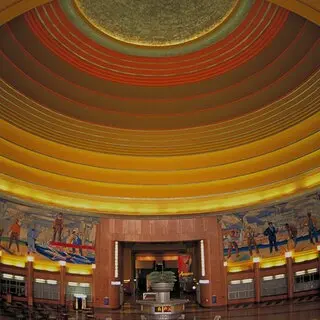
The theatre's interior bears the stamp of architect, John Eberson, with its elaborate Spanish Mission style.

Credit: Richmond CenterStage

The architect of the original Carpenter Theatre, John Eberson, was a leading New York architect of the 1920s noted for his extravagant theater designs. The theater certainly bears his stamp. It is an elaborate interpretation of the Spanish Mission style, with a dark red brick exterior heavily ornamented with sculpted terra cotta and limestone. The CenterStage rehabilitation preserves this style while creating a larger stagehouse to accommodate popular Broadway shows, expanding the lobby, ticketing and concession areas and updating its acoustics, seating and technology to meet modern standards. The CenterStage project also includes a new 80,000 square foot facility, the Dorothy Pauley Square, adjacent to the Carpenter. All area arts groups will have the opportunity to use this multi-purpose complex which includes: Rhythm Hall, a multipurpose venue which caters to a variety of performing arts groups,; a 200-seat theater, named the Libby Gottwald Community Playhouse, to be used primarily by small, non-profit theater groups and for small musical performances, and a performing arts education center, the Genworth Bright Lights Education Center which will offer educational workspaces, a visual arts gallery, meeting rooms and offices. Total development costs for this project were over $73.5 million. Sources of funding to cover the CenterStage project include $25 million from the City of Richmond and a $8.5 million grant from the Commonwealth of Virginia. The community has shown its support with almost than $30 million in donations coming from corporations and individuals.

NATIONAL TRUST INVOLVEMENT

 NTCIC partnered with its investor, US Bank, to bring $12.1 million in federal and state rehabilitation tax credit and New Markets Tax Credit equity to the project. By acting as a tax credit syndicator, NTCIC is able to provide this valuable cash infusion to the developer entity in exchange for the tax credits to be ultimately generated by the successful completion of the certified historic rehabilitation. NTCIC then provides the tax credits to US Bank which has sufficient tax liability to desire the dollar-for-dollar reduction in taxes owed offered by the federal historic tax credit. If the developer entity was to keep the credits for its individual use, then the reduction in taxes owed would take effect only after year end taxes are filed and processed by the IRS and not during construction when the equity would be most useful.

COMMUNITY IMPACT

The theater has served as home for the Richmond Symphony, the Richmond Ballet and the Virginia Opera as well as smaller Broadway productions, special concerts and other performances. Once renovated, the larger stage size (nearly doubled) will help draw more than 40 touring plays, musicals, family shows and popular entertainment events annually which will complement an already full season of more than 55 Richmond Symphony, Ballet and Opera performances. A dozen or more community presentations will round out the calendar for the year, helping the Theatre to stay busy for an estimated 200 days a year. These expanded offerings will bring create new permanent jobs and increased foot traffic, which will have a multiplier effect on the nearby restaurants, shops and hospitality businesses. Construction itself brought an estimated 500 new jobs to the area, a notable achievement in a low income census tract that has a poverty rate of 37% and a median family income of less than half that of the Metropolitan Area.

BY THE NUMBERS

Project Goal:
2,000-seat theater and a new 80,000 square foot community and arts education center

Total Development Cost:
$73.5 million (MM)

Developer:
Richmond CenterStage

Tax Credit Investor:
US Bank

Architect:
Wilson Butler Architects,
Boston, MA

Preservation Consultant:
Mary H. Sadler,
Richmond, VA

Key Project Financing:
$12.1 MM – NTCIC federal historic and New Markets Tax Credit equity investment
$25 MM – City of
Richmond
$8.5 MM – 
Commonwealth of Virginia grant
$9.5 MM – Kasper Mortgage Capital state historic tax credit equity investment

Jobs Created:
Construction – 568
Permanent – 689


For more information contact:

Corinne Ingrassia, Director of Marketing, NTCIC
Phone: 202.588.6278. Email: corrine_ingrassia@ntcicfunds.com