Flashback: Saving South Pasadena

(Scroll left and right on the timeline above to trace the history of Route 710, starting here in 1886.)

By Elizabeth S. Merritt

Freeway Fighting Photos

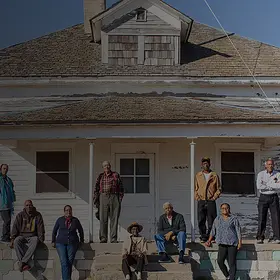
Our special online gallery shows the dedicated Freeway Fighters of South Pasadena and El Sereno in action at their various rallies and marches, as well as some of the hundreds of irreplaceable older and historic properties that were directly threatened by the proposed path for the 710 highway extension.

I recently celebrated my 25th anniversary at the National Trust for Historic Preservation – a quarter century spent using legal advocacy to protect historic places around the country. In those years, I have experienced the thrill of many victories and the agony of many defeats. Among the wins, by far the most meaningful was an injunction that was issued exactly a decade ago – on July 20, 1999 – by federal judge Dean Pregerson in Los Angeles. That decision brought to a screeching halt the notorious Route 710 (Long Beach) freeway extension through South Pasadena, Pasadena and El Sereno in Southern California. It replaced an earlier injunction issued in 1973, and luckily, it remains in effect today.

In 1989, the National Trust included South Pasadena, Pasadena, and the nearby Los Angeles community of El Sereno, on its annual listing of America's 11 Most Endangered Places. The three communities in the freeway corridor remained on the list for an unprecedented total of five years (our first multi-year listing), and for good reason: the proposed 710 freeway would have demolished almost 1,000 homes and 6,000 trees in a six-mile area, displacing 2,400 people and cutting through the heart of four National Register historic districts and skirting the boundaries of two others. The below-grade freeway would have included six cut-and-cover tunnels, and dozens of historic homes would have been temporarily stored and then relocated on top of the tunnel lids. At the time, the estimated cost was $1.4 billion (certainly much higher today), yet studies by the Department of Transportation estimated that, after all the construction was complete, traffic in the corridor would move less than one mile an hour faster than if no freeway were built at all.

The Federal Highway Administration's decision to approve the freeway project in 1998 was the culmination of an extraordinary administrative process, in which the Environmental Protect Agency, the Interior Department and the Advisory Council on Historic Preservation all raised formal objections to the project. Rather than following its usual approach of signing a mitigation agreement, the Advisory Council on Historic Preservation exercised its rarely-used authority to oppose the project (on three separate occasions, actually), and even took the unprecedented step of sending its objections directly to the President of the United States in 1998. Five years earlier, in January of 1993, the Advisory Council thwarted an effort by the Secretary of Transportation to ram through final approval of the project in the waning days of the Bush Administration by referring the inter-agency dispute to the Council on Environmental Quality (CEQ). In turn, CEQ asked the Secretary of Transportation to evaluate a "Low Build" Alternative. This option, endorsed by the National Trust and the other opponents of the freeway, would have used existing arterial surface streets rather than a freeway to improve the flow of traffic.

The objections raised by these agencies did not have the effect of "vetoing" the freeway project, but they were highly influential in the court's decision to issue the injunction. It's a useful reminder of what a powerful statement it is when one federal agency is willing to say to another, "We think this project is wrong." I hope we'll start to hear that more often in the coming years.

In addition to the federal agency objections, it's important to appreciate the decade of tireless advocacy leading up to the injunction by a broad coalition of freeway fighters, which included homeowners and residents in the corridor; preservation groups at the local, state and national level (including the National Trust); and the City of South Pasadena itself, which was determined to prevent the destruction of its core with a second freeway that would have cut the city into four pieces. The legal victory would not have been possible without the hard work of the city's special counsel, Tony Rossmann.

On July 20, 1999, the court concluded that the coalition was likely to win its lawsuit, and therefore an injunction should be issued on three primary grounds:

      • Section 4(f) of the Department of Transportation Act, because the Federal Highway Administration failed to provide adequate reasons for rejecting the "Low Build" Alternative, which appeared to be "prudent and feasible" and would have avoided and/or minimized the destruction of historic properties. The court also criticized the agency's assumption that any homes not directly in the path of the bulldozer would have been without substantial harm, even those that would be left perched on the edge of the yawning freeway trench.
      • The National Environmental Policy Act, because the "Low Build" Alternative was not adequately studied, and a supplemental Environmental Impact Statement should have been prepared.
      • The Clean Air Act, because the estimated traffic on the proposed new freeway was not included in the long-term air quality projections for the region.

Naturally, there was no shortage of long work nights and dramatic developments leading up to this milestone decision. One memorable moment came in 1995, when the Keeper of the National Register officially recognized a working-class Latino neighborhood in El Sereno as being eligible for the National Register of Historic Places, despite objections from, you guessed it, the California Department of Transportation. The National Register ruling, together with an "environmental justice" lawsuit filed by the National Association for the Advancement of Colored People Legal Defense Fund, led to the realignment and reconfiguration of the freeway. The cut-and-cover tunnels and below-grade alignment, which were originally limited to the affluent white neighborhoods in the corridor, were added to the El Sereno portion of the proposal as well. In an important precedent, the opinion by the Keeper of the National Register specifically recognized that National Register significance for residential developments should not be limited to those that are "strictly homogeneous in design (only grand estates, Craftsmen designs or certain income levels)," but can include diverse middle- and working-class neighborhoods as well. This recognition – that the National Register is not just for the mansions of wealthy white people – really helped galvanize the pride of the El Sereno community and their opposition to the freeway. 

In 1998, some five and a half years after the injunction, the Federal Highway Administration suspended its approval of the freeway, advising the California Department of Transportation that a full supplemental Environmental Impact Statement would be required before the project could be considered any further. In April 2004, the California Transportation Commission responded by rescinding its own approval of the project, reversing a decision that was first adopted back in 1964.  

Today, there are pipe dreams about evaluating a full-bore tunnel through the corridor that would supposedly allow a freeway to be built without destroying above-ground historic neighborhoods. It's hard to imagine how such a project could be funded, with cost estimates that range from $3.5 billion to $11.8 billion, but talk of this option persists. A recent bill in the state legislature prohibiting a surface freeway and requiring that any extension be limited to a bored tunnel was characterized by one commentator as analogous to "authorizing a bridge to the moon to be built." Yet the California Department of Transportation remains unwilling to sell or release the 500 homes it still owns within the corridor, estimated at $200-$500 million. Why? Even worse, almost 18% of those homes are just "sitting empty, doing nothing but rotting away." As a result, some have called Caltrans "the country's biggest slumlord," and agency officials have done very little to refute that claim.

Resolution of this issue is long overdue. 

Looking back, there are more than a few invaluable lessons tucked away in the many controversial years of this decades-long battle. In my opinion, the biggest that we as preservationists should never forget is that there are countless ways to save the places that matter most to us, and that even our individual actions can have a powerful impact if we all join together. You can rally your neighbors and march through the streets with handmade signs. You can create a petition and send the signatures to your mayor. You can schedule an appointment with your state senator to make your case in person. You can even file a lawsuit. However, preservation works best when all of these things come together.

They certainly did in South Pasadena.

Elizabeth S. Merritt is deputy general counsel for the National Trust for Historic Preservation' Legal Defense Fund, which provides legal advocacy support and resources to communities and organizations throughout the country to strengthen and ensure the effectiveness of local, state and federal preservation laws.Rule: Related Resources

Rule: Plain Line

Nickname
Comment
Enter this word: Change

Submitted by Get the Facts at: September 6, 2009
Pat the "slum landlord" does take care of these homes with the meager sums that the state gives them to do so. Do you have any idea how much it costs to maintain a 100 year old Craftsman house today? With 500 properties to maintain and historic guidelines to adhere to, I think they're doing a decent job. Are you aware of the current state of the economy? Count your blessings that these 500 properties aren't boarded up for lack of funds.

Submitted by Pat at: September 4, 2009
Good Job. Next fight will be to get the slum landlord to take care of the homes that they have so they don't just rot away. Homes deserve to be inhabited by people that love and care for them.

Submitted by SP at: September 4, 2009
I've lived in South Pas since 1977. We're very grateful for help from organizations like the National Trust and Sierra Club. Fight On!

Submitted by Greenie 1969 at: July 24, 2009
I am involved with Saving South Park in Beaumont. We are really fighting BISD but we have people and organizations behind us and that beleived in our fight.Good Luck to Saving South Pasadena


Powered by Convio
nonprofit software