Register   |    Login

Helping people protect, enhance
and enjoy the places that matter to them

Stimulus Funding Supports Shovel-Ready Preservation in Montana

Program Update

Big
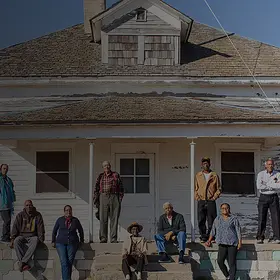
As a result of the stimulus, $4 million in funding is now flowing to shovel-ready preservation projects ? like Buffalo's Big Barn at Naylor Ranch ? throughout the State of Montana.

These days, funding for historic preservation is a pretty scarce commodity. In a climate where states are routinely cutting funds and eliminating historic preservation programs, one state – Montana – stands alone as a noteworthy exception.

Why? In nearly every state, there is a lot of talk about budget deficits as well as the need for job creation and stimulating the economy, especially with the influx of federal funds to states made available through the American Recovery Reinvestment Act. What is different about Montana is their legislature recognized the strong role historic preservation plays in economic development and job creation by passing the Montana Reinvestment Act, which established the Historic Preservation Competitive Grant Program.

The Montana Preservation Alliance (MPA) deserves a lot of credit here for initially proposing the idea and for working diligently to build support for its passage. The hope is that this program becomes permanently funded. A total of $4 million has been set aside for the program, with $3.6 million available for competitive grants for projects up to $250,000. Three projects have already been awarded funds through the program:

      • Marcus Daly Mansion, Hamilton: $50,000
      • St. Mary's Mission, Stevensville: $40,000
      • Traveler's Rest Historic Site, Lolo: $180,000

Applications are due November 16, 2009. To apply for funding or for more information, please visit http://www.recovery.mt.gov/commerce/hpg/default.mcpx.

Background Information

Montana's legislature, like those all across the country, deliberated on how best to spend stimulus dollars allocated to the state through the American Recovery and Reinvestment Act. With $780 million set to arrive in state coffers, MPA undertook in February 2009 the process of securing a portion of these funds for the preservation of outstanding properties across the state.

MPA first approached the State Historic Preservation Office (SHPO), and together, they crafted a proposal for a multi-tiered program to support three broad funding categories with $10 million – public buildings, barns, and county courthouses.

MPA staff and friends at the SHPO quickly contacted preservation officers, museums, and communities around the state to create a list of shovel-ready projects that were languishing due to funding issues. The result was a list of $20 million in projects that were ready to commence in spring of 2009, and another $18 million that would be on track for construction within a year. The criteria included significant property listed or eligible for the National Register of Historic Places; conformance with the Secretary of the Interior's Standards for Historic Preservation; ability of the community to execute the project in a timely fashion; and stimulus of local jobs and employment.

Fortunately, there are many friends of preservation in Montana's state legislature, and when the list of potential properties was circulated, leaders of both parties embraced the cause. They particularly understood how these projects would create jobs in small towns across the state, including a capital improvements project in Helena that, as proposed and later accepted, would employ some 150 workers over a 12 to 18 month period.

While there were many worthy proposals competing for stimulus funds, the preservation coalition managed to secure $4 million to fund competitive brick-and-mortar grants to properties of outstanding significance to Montana's history and heritage. Montana's governor signed the bill into law on May 14, 2009, and people across Montana were eager to get started. The program began immediately, and is being administered through Montana's Department of Commerce, which also houses the state's Main Street program and the Montana Heritage Commission. MPA will continue to play an active role.