Classroom Resources
Need some inspiration? The following resources, lesson plans, and activity guides are a small taste of the wealth of preservation-related teaching materials available on the Internet today. Bookmark this page and check back often as we continue to grow this directory. Also, please consider submitting any lesson plans or resources that you have created for your students.

General Resources
Historic Schools Day: A Teacher's Resource Guide
National Trust for Historic Perservation
Grade Level: General
Students are often less concerned about their school building than about what they are learning and what social activities are occurring. However, learning the history of their school is a way for students to gain perspective on broader community and national events. Use this lesson on Historic Schools Day, taking place in 2010 on April 27, as a way to show your students that their school is not just a physical place that exists in isolation.
Preservation on a Shoestring
Save Our History
Grade Level: General
The current economic climate is not conducive to adding programs or starting big dollar projects. Yet this can be the perfect opportunity to teach preservation, and impact your community without having to use additional resources.
Documenting History Activity Guide
Save Our History
Grade Level: General
These hands-on activities offer the educator a unique tool chest of ideas to make “history live” in the classroom. They can be applied in some form or another to any American History unit-based study used as extracurricular activities.
Preserving Our Nation’s Cultural Resources
Save Our History
Grade Level: General
The preservation of the nation’s past – historic properties, material culture, public and private records, historic photographs, oral history, and recordings – allows each generation to pass on tangible evidence of another era to the next generation.
Preserving Our Nation’s Historic Neighborhoods, Buildings, Homes, and Sites
Save Our History
Grade Level: General
Older buildings embody our history, and that’s one reason why it’s important to save them. But that isn’t the only reason.
Preserving Our Nation’s Historic Resources
Save Our History
Grade Level: General
America’s historic places embody our unique spirit, character, and identity. They tell compelling stories that make our heritage real. Preserving historic places as living parts of communities helps us understand the sweeping diversity and magnitude of the American experience.
40th Anniversary of the National Historic Preservation Act: National Archives and Records Administration
Save Our History
Grade Level: 5-12
The National Historic Preservation Act has been called the most wide-reaching piece of legislation affecting preservation in the history of the United States. October 2006 marked its 40th anniversary. This occasion provides an excellent opportunity to introduce students to issues related to historic preservation, prompt them to consider why and how history—whether in the form of historic sites, manuscripts, artifacts, stories, or other forms— is preserved, and inspire them to learn more about the history of their own communities.
40th Anniversary of the National Historic Preservation Act: National Park Service
Save Our History
Grade Level: 5-12
The year 2006 marks the 40th anniversary of the National Historic Preservation Act. One of the key provisions of the Act created the National Register of Historic Places as we know it today, the nation’s official list of cultural resources worthy of preservation. Listings in the National Register represent the tangible legacy of our history—from archeological sites to commercial districts and from grand landmarks to modest roadside diners. These places define what it means to be an American and provide a wonderful educational resource for teachers and students.
40th Anniversary of the National Historic Preservation Act: The Smithsonian’s National Museum of American History
Save Our History
Grade Level: 5-12
The celebration of the 40th anniversary of the National Historic Preservation Act provides an excellent opportunity to introduce students to the methods historians use to discover and document American history and the role that individuals can play in the preservation of the past.
Studying Places
Schoolyards to Skylines
Chicago Architecture Foundation
Grade Level: K-8
This 500-page book uses both famous and lesser-known buildings, sites, people, and events in Chicago as tools for teaching units in social sciences, science, mathematics, language arts, and fine arts. Each lesson strengthens the fundamental educational skills of students and is solidly based on state and city academic standards.
American Lighthouses
Save Our History
Grade Level: General
Students will be able to define preservation and explain the importance of preserving historical places. They will explore the role of lighthouses in American history and the importance of maritime travel and safety in America’s development, expansion, economy, and military strength.
The Mural of the Story: Creating Murals That Embody a Building's Spirit
New York Times Learning Network
Grade Level: 6-12
In this lesson, students learn about the lengths to which people will go to restore murals with historic and social value. Students then create proposals and designs for their own murals, representative of the history and significance of a locally, nationally, or internationally known building.
Federal Courthouses and Post Offices: Symbols of Pride and Permanence in American Communities
Teaching with Historic Places
Grade Level: 5-12
This lesson could be used in American history, social studies, government, civics, and geography courses in units on the growth and role of the federal government, the U.S. court system, federal architecture, urban growth, city planning, and preservation policy.
Roadside Attractions
Teaching with Historic Places
Grade Level: 5-12
The lesson could be used in units on popular culture or the rise of American motor tourism.
The Big Not So Easy: Analyzing New Orleans Two Years After Hurricane Katrina
New York Times Learning Network
Grade Level: 6-12
In this lesson, students analyze and discuss statistics regarding the conditions in New Orleans since the flooding caused by Hurricane Katrina. They then use their findings to compare and contrast conditions in their own communities.
Sacred Space: Learning About and Creating Meaningful Public Spaces
New York Times Learning Network
Grade Level: 6-12
In this lesson, students consider the two finalists in the Lower Manhattan Development Corporation's contest for architectural designs for the site of the World Trade Center. Students then create their own designs for a meaningful public space, then critique each other's designs.
Where the Wild Things Are: Examining and Creating Architectural Accents for Community Structures
New York Times Learning Network
Grade Level: 6-12
In this lesson, students explore the role of gargoyles in New York City architecture as a starting point to considering architectural structures in their city. Students create designs that illustrate ways in which those local structures may be enhanced by character figures, and then create character figures for the entryways of their rooms at home.
An Overview of Downtown Louisiana
Louisiana Studies in Historic Preservation
Grade Level: 6-8
A creative lesson that engages students in designing their own downtown and developing its history based on different Louisiana town-types.
Historic Architectural Styles
Arkansas Historic Preservation Program
Grade Level: 5-12
The student will be introduced to architectural styles and learn more about the characteristic features of these styles. Students will also learn about the historical events and cultural diffusion that caused architectural styles to become popular.
Your Hometown
Be a Building Detective!
Arkansas Historic Preservation Program
Grade Level: 5-12
Buildings identify a place. This activity invites students to learn more about a historic building in their neighborhood or city by "adopting" it.
There’s No Place Like Home: Creating a Walking Tour of Hidden Historical Hometown Hot-Spots
New York Times Learning Network
Grade Level: 6-12
In this lesson, students conduct a one-question interview with their peers to prepare to research the history of their hometown, which they use to create a "hidden history" walking tour.
Land Marked: Proposing Local Sites for Landmark Preservation
New York Times Learning Network
Grade Level: 6-12
In this lesson, students discuss the significance of officially designated landmarks. They then research and propose sites of local interest for possible designation.
Home Is Where the [Blank] Is: Generating Ideas to Improve and Enhance Your Hometown
New York Times Learning Network
Grade Level: 6-12
In this lesson, students will identify their favorite and least favorite locations in their community and create proposals that list recommendations for city leaders on how to protect or improve these locations.
Local Pride in a Guide: Creating an Informative Booklet About Your City
New York Times Learning Network
Grade Level: 6-12
In this lesson, students learn about the distinctive cultural and historical attributes of Boston and Philadelphia. They then research the history, geography and culture of their town or city to create a booklet.
Teaching Diversity
Chicago's Black Metropolis: Understanding History Through a Historic Place
Teaching with Historic Places
Grade Level: 5-12
This lesson could be used in units on early 20th-century urban history, especially the migration of African Americans to the city. The lesson will help students develop skills of historical thinking and reflect on the value of historic preservation.
Home Away from Home: Investigating Your City's Immigration History
New York Times Learning Network
Grade Level: 6-12
In this lesson, students explore the many ways that diverse immigrant populations impact cities by investigating the local immigrant populations. Students will work in small groups to create 'immigration profiles' of the nationalities of immigrants reflected in their community's or city's population.
Mapping Ethnic Neighborhoods
History Works
Grade Level: 10
Students are introduced to urban immigrant tendencies (i.e. clusters, transplanting churches and schools, benevolent societies, celebrations, etc.). Students also identify their neighborhood and research the changing ethnic make-up of the area.
Civil War History
Creating a Historic Site
Civil War Preservation Trust
Grade Level: 3-6
Students will understand that historic sites are unique and non-renewable resources that must be preserved since they cannot be replaced.
Hallowed Ground: Preserving Arkansas’s Civil War Battlefields
Arkansas Historic Preservation Program
Grade Level: 5-12
The purpose of this lesson plan is to instill a historic preservation ethic in young Arkansans by helping them understand the Civil War in Arkansas, and why the lessons it taught us must not be forgotten.
This Gives Life To Thee: A Guided Understanding of Civil War Battlefield Preservation
Civil War Preservation Trust
Grade Level: 8
Students will recognize, through the use of visual, audio and written materials, that works of art in numerous forms can be memorials to the dead.
Archeology & Public Lands
Missing Pieces: Archeological Preservation
Texas Historical Commission
Grade Level: 6-8
Students participate in an activity which illustrates the impact of removing artifacts which are randomly found by individuals. Students are provided with information about archeological preservation and collaborate with their team to create a pamphlet that will persuade others to preserve the past.
Cemeteries
Historic Cemeteries: History Written in Stone
Arkansas Historic Preservation Program
Grade Level: 5-12
The purpose of studying a cemetery is to encourage an appreciation of its unique historical significance. History “comes alive” when students realize that the people buried there actually lived and helped make their community what it is today.
Community History at the Local Cemetery: A Save Our History How To Project Guide
Save Our History
Grade Level: General
Students will visit their local cemetery, record details from the headstones, and conduct a detailed analysis of the information they collect as it pertains to local and national history.
Oral History
Collecting Community Members’ Oral Histories: A Save Our History How To Project Guide
Save Our History
Grade Level: General
Students will record, gather, analyze and process information about local World War II war veterans (or other community elders) via recorded oral interviews.
Preserving the Past with Oral History
Arkansas Historic Preservation Program
Grade Level: 5-12
This lesson will engage students in active historical learning by conducting interviews and recording oral history.
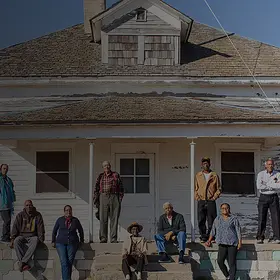
Does your school matter? Take a class picture in front of your older or historic school building and share it with the world through the National Trust's This Place Matters campaign. No camera? No problem! Plant a flag on our interactive map.