Why Teach Preservation?
By Richard Moe
Historic places often serve as valuable educational tools for teachers interested in bringing their American, state, and local history curricula to life. It's hard to imagine that some of these historic treasures ? including the places you teach about like Antietam National Battlefield ? could be endangered.
hat's the difference between reading about Frank Lloyd Wright and visiting his home and studio in Oak Park, Illinois? Both can tell you about the life of a great American architect, but only his home and studio surrounds you with the same places and sights that inspired him and that he used to inspire others. It's something we can share with Wright, even though he lived there a century ago.
At the National Trust for Historic Preservation, we work with millions of people each year to save places just like the Frank Lloyd Wright home and studio; we'd never allow these nationally-significant landmarks to be lost. But the National Trust also works to preserve places that tell a community's story – the house that's been part of a family for generations; the school that children have attended for decades; the church, movie theatre, and hardware store on Main Street. They link us with our past and help us understand who we are. It's not just that history happened – it's that it happened here.
What Makes a Historic Place Worthy of Preservation?
Older buildings embody our history, and that's one reason why it's important to save them. But that isn't the only reason.
Many older buildings are important – and worth preserving – simply because they're good to look at. They are "a gift to the street" whose style, textures, materials, and charm (and maybe even eccentricity) enrich and enliven their surroundings. These buildings are worth saving because our communities would be less interesting, less attractive, and less distinctive without them.
Other buildings are worth saving because they have plenty of good use left in them. Innovative examples of "adaptive use" can be found everywhere. Factories have been turned into convention centers, train stations reborn as restaurants, mills converted into shopping centers, office buildings transformed into apartments, and on and on. This process is good for the environment – think of it as the ultimate form of recycling.
A Preservation Case Study
Historic places often serve as valuable educational tools for teachers interested in bringing their American, state, and local history curricula to life. It's hard to imagine that some of our historic treasures – including the places you teach about in class every day – could be endangered. By providing leadership, education, advocacy, and resources, the National Trust helps organizations and individuals ensure that these important sites remain assets to teachers, students, and all Americans.
For example, Antietam (Sharpsburg to many in the South) witnessed a defining moment in American history. It was near this small farming community that General Robert E. Lee's first drive into the North came to an end. This narrow Union victory prompted Lincoln to issue the Emancipation Proclamation, beginning the end of slavery in the United States. In the late 1980's, unfortunately, proposed development threatened the area surrounding what had become Antietam National Battlefield. Construction just outside the park could have destroyed the beauty and tranquility of the place where many of the battle's 23,000 casualties – the largest single-day total in American history – lie buried.
Recognizing the danger to this crucial spot, a coalition of nonprofit organizations and government agencies – including the National Trust – dedicated themselves to saving the battlefield and its setting.
The State of Maryland alone has helped safeguard over 4,000 adjacent acres, leading to the creation of a program which protects the state's agricultural, natural, historic, and cultural resources. Today, this coalition continues fighting to preserve a vital reminder of one of America's most trying and most triumphant times.
How You and Your Students Can Learn About and Help Preserve the Historic Places in Your Community
From the Antietam National Battlefield in Maryland to a high school in Boise, Idaho, and the oldest surviving McDonald's restaurant in Downey, California, we do our best on a national level to aid preservation efforts in communities across the country. Historic preservation offers solutions to many issues currently facing communities across the country, including housing, transportation, and threats to historic neighborhood schools. Our work starts locally, and you can help. There are a number of activities that will help you and your students preserve history while contributing to the health and welfare of your local community.
- Explore Family History: Ask your students to investigate the places that are significant to their relatives, including where their parents went to school or got married.
- Ask Neighbors About the Neighborhood: Encourage students to talk to people who've lived on their street for a long time. Find out what they remember about living there and about the people who have moved on.
- Visit Main Street: Traditional commercial districts often have appealing buildings and feature locally-owned stores that are vital parts of the community.
- Take a Hometown Tour: Take your students to visit a historic site in your area or stop by the local historical society or museum.
- Read All About It: Every community has a book about its local history, and many have more than one. They're available at the local library (often a historic place itself) or at the historical society.

Richard Moe is the president of the National Trust for Historic Preservation. This article originally appeared in the History Channel's "Save Our History Educator's Manual."
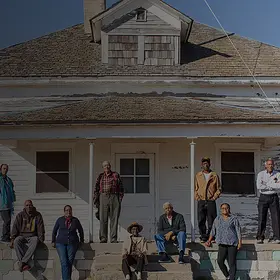
Does your school matter? Take a class picture in front of your older or historic school building and share it with the world through the National Trust's This Place Matters campaign. No camera? No problem! Plant a flag on our interactive map.