Fire Departments, Life Safety & Emergency Responders: Engaging Preservation
- Disasters can cause power outages. Use the button above to print a copy for reference.
- If you find that any external link contained on this page no longer works, begin your web search by using the exact title as resources have sometimes been moved.
Introduction
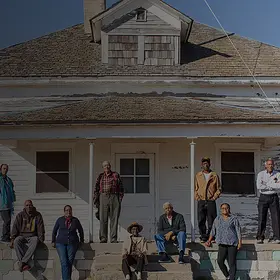
Cover Image: Working With Emergency Responders (Heritage Preservation)
Credit: Heritage Preservation
Fire departments, life safety personnel, and emergency management officials are generally the first responders in disaster scenarios. Their roles often require them to make quick decisions that necessarily impact how historic resources will be treated, sometimes in the absence of property owners, sometimes in the absence of historic preservation professionals. Although a preservation-integrated approach to disaster response is often mandated by public policy at the local, state, and federal level, that policy has the greatest chance of being fully actualized when these indispensible first responders are knowledgable about why it is in place and how its mechanisms and assumptions work. The purpose of this document is to demonstrate to fire departments, life safety personnel, and emergency management officials opportunities and methods for integrating historic preservation into their response work.
The most critical resources for this topic are marked with a check.
Why Preservation Needs to be Integrated Into Disaster Planning
In its seminal manual, Disaster Planning for Florida's Historic Resources, the Florida Department of Resources puts it simply: "Planning for the protection of historic resources prior to a disaster is smart public policy." Historic resources annually contribute billions of dollars to the national economy, and heritage tourism is a fundamental element of local economies throughout the nation. These resources are also critical features of our environment, and represent the significant investment of time, money, manpower, thought, energy, and natural resources. They help shape residents' and visitors' sense of a place, serve as physical waypoints and anchors of community, and contribute to forging local and regional identity. It is manifestly in communities' economic and emotional best interest to plan for the protection of these resources and to prevent their needless loss when they have been damaged or threatened by natural disasters. Federal and state agencies, local governments, and concerned organizations continue to work nationwide to systematically integrate historic preservation policy and practice into disaster preparation and response. Because first responders are the executors of these plans, it is critically important that they be versed in preservation mechanisms and assumptions in order to guarantee the best possible outcome for historic resources.
Where Preservation Meets Disaster Preparation and Response
Although state and local governments are increasingly creating their own preservation-integrated disaster plans, and federal agencies like FEMA and the National Park Service have developed extensive documentation and programming for disaster preparation and response, the greatest share of preservation work relating to disasters is carried out in reaction to an event. In some ways this is inevitable as much physical work cannot occur until damage has been done. Nevertheless, more widespread planning and coordination among agencies would both streamline and reduce the volume of response effort required.
Created through a joint effort by Heritage Preservation and Preserve America, Preparing to Preserve: An Action Plan to Integrate Historic Preservation into Tribal, State, and Local Emergency Management Plans (Heritage Preservation, 2008) clearly identifies steps that communities—including disaster personnel—can take to integrate preservation into their work. These include the following (for a full list and an explanation of how to accomplish these goals, refer to Preparing to Preserve):
- All communities should complete a comprehensive survey of their historic resources and map those resources using GIS. The survey should be compatible with city or county emergency preparedness databases and mapping platforms, and it should be easily and regularly updated.
- State Historic Preservation Offices, historic district commissions, and local preservation organizations should offer to work with the emergency managers responsible for developing comprehensive hazard mitigation plans.
- Ask the local Emergency Operations Manager to include a qualified preservation professional at the Emergency Operations Center.
- Recruit and train qualified preservation professionals to serve on local Damage Assessment Teams.
- Develop damage assessment forms and processes that take into consideration the special materials and features of historic properties.
- Work with local officials to develop a post-disaster demolition permitting process that encourages a preservation ethic and allows for the evaluation of damaged resources by historic preservation experts.
- Encourage regulatory review bodies to adopt rules and procedures for post-disaster review and permitting.
- Urge local officials to select locations for temporary housing, evacuation sites, utility and service staging areas, and debris removal and storage that do not impact heritage resources.
- Develop salvage protocols for historic resources and work to have them included in tribal, state, or local emergency response plans.
- Propose that a qualified preservation professional take part in deliberations regarding post-disaster recovery activities.
- Develop a training course that addresses the planning, response and recovery needs of historic resources for emergency management planners and first responders.
- Encourage historic preservationists and other built environment professionals to become CERT-trained. Explore ways to expand CERT training to include consideration of heritage resources.
- Build relationships between the historic preservation community and emergency management officials and first responders.
- Develop a cost-benefit formula that can be used to determine the economic value of historic resources and the economic impact to the community of their loss.
Resources

Integrating Historic Property and Cultural Resource Considerations Into Hazard Mitigation Planning: State and Local Mitigation PlanningHow-To Guide (FEMA 386-6 / May 2005) is a 202-page how-to guide that addresses similar issues through a 4-step process.
Working with Emergency Responders: Tips for Cultural Institutions(Heritage Preservation, 2009) is a 5-page document detailing how cultural institutions and emergency responders can work together in disaster scenarios.
Disaster Planning for Florida's Historic Resources contains a chapter on integrating historic preservation into the local response and recovery framework (pp 39-43), as well as information on the interface between historic preservation and emergency management (pp. 12-19).
Preparing to Preserve: Emergency Planning Model Checklist for Historic Preservation (Heritage Preservation) is a checklist to ensure that the recommendations from the core Preparing to Preserve document have been integrated.
For Fire Departments Who Deal with Historic Resources
Web Resources
- Fire Damage Assessment (section 4.5) (Minnesota SHPO). Minnesota's Thinking About the Unthinkable: A Disaster Plan For Historic Properties in Minnesota talks about properly venting heating equipment and reducing fire hazards in buildings.
- Fire Safety in Historic Buildings (National Trust for Historic Preservation)
- GSA Fire Safety Retrofitting(General Services Administration)
- Fire Suppression in Historic Buildings (The Building Conservation Directory, 2001)
- NFPA 914: Code for Fire Protection of Historic Structures, (National Fire Protection Association) used by National Trust properties.
- HUD Guidelines on Fire Ratings of Archaic Materials and Assemblies, (HUD) A 184-page HUD document detailing the fire safety of materials often found in historic buildings but often omitted from contemporary fire ratings sources. This document can assist in the modernization and reuse of historic buildings by providing more thorough information on the fire safety of certain materials.
- Fire Inspection Checklist, (National Fire Protection Association) Designed for professionals but relevant to building and homeowners, this checklist can help identify and reduce fire risks in historic buildings.
- Strategic Fire Protection in Historic Buildings (The Building Conservation Directory, 1996). Written for the UK, this article mentions laws not applicable in the US, but is nevertheless relevant.
Print Resources
- Automatic Fire Suppression for Historic Structures (APT Bulletin, Vol. 34, No. 4, (2003), pp. 35-40).
- Considering Fire-Safety Improvements to Historic Buildings (APT Bulletin, Vol. 34, No. 4, (2003), pp. 10-17)
- Preserving History from Fire: Bridging the Gap Between Safety Codes and Historic Buildings (Old House Journal, November/December 2000). Addresses fire code issues for older buildings.