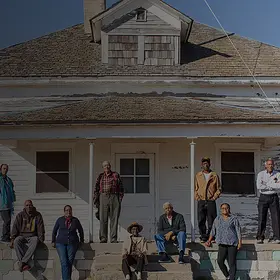
Rebuild Main Street, Create Jobs, Protect Our Heritage
Economic Stimulus Proposals
- Renewed Investment in America's Historic and Older Public Buildings and Infrastructure
- Main Street Reinvestment Grants for Strengthening Communities
- Historic Tax Credit Improvements for Jobs, Housing and Investment
- Historic Preservation Fund Emergency Jobs Program
- Federal Incentive Funding for State Rehab Tax Credit Programs
- Disaster Assistance for Iowa and Texas
- Public Land Investments for Jobs, Energy Delivery and Revitalization
Overview
As President Obama and Congress develop strategies to address this serious recession, the National Trust for Historic Preservation applauds their leadership in calling for investment in public buildings and infrastructure. We support the principle that short-term stimulus proposals must have long-term benefits for our economy, environment, and society.
Much of the national dialog surrounding relief for the country's ailing financial markets, businesses, lending institutions and industries refers to the larger implications for "Main Street." Given the substantial role the National Trust for Historic Preservation and the preservation community play in supporting Main Street jobs, revitalization and economic development, we have been encouraged by this critical emphasis on the country's historic core – its communities and the people who make them work.
We propose stimulus plans that will rebuild Main Street communities in urban and rural areas across America. Existing infrastructure, including public buildings, roads, sidewalks, water lines, sewers and utilities, have been neglected for far too long. Significant reinvestment at the state and local levels creates jobs, supports businesses, and generates immediate and tangible economic results. In fact, providing assistance to Main Streets through the stimulus programs the President-Elect and Congress develop is a long-term investment in the very "bricks and mortar" that leverages private dollars and improves the viability of places desperately in need of federal resources. And stewardship that emphasizes reusing and rehabilitating the existing buildings, infrastructure, communities and places we already have is inherently more efficient and sustainable.
For example, the reuse of older and historic buildings itself is a powerful tool for job creation and employment retention. Rehabilitation generally uses about 20 percent more labor and, in turn, produces a greater number of jobs than new construction. As compared to new construction, every $1 million spent to rehabilitate a building results in:
- $120,000 more dollars initially remaining in the community;
- Five to nine more construction jobs created;
- An average of 4.7 more new permanent jobs created;
- Household incomes in the community increasing by $107 more than through new construction;
- Retail sales in the community increasing by $142,000 – $34,000 more than through new construction; and
- Real estate companies, lending institutions, service vendors, and restaurants receiving more direct monetary benefits.
Economic Stimulus Proposals
Renewed Investment in America's Historic and Older Public Buildings and Infrastructure
America's economic success was built upon smart investments in public buildings and infrastructure, and our future depends upon dealing with the deferred maintenance and disinvestment of these assets. The National Trust for Historic Preservation proposes a stimulus plan that would fund an immediate renewal program for the following:
- Federal Building Improvements – Many of America's federal buildings such as courthouses, post offices and transportation facilities are in need of rehabilitation and reinvestment, and the stimulus plan should provide for improvements to this inventory. In addition, deferred maintenance and lack of attention have seriously compromised certain federal buildings' viability. The Smithsonian Institution, for example, suffers from an estimated $2.5 billion in deferred maintenance needs. (Note that structures under National Park Service, Bureau of Land Management, and US Forest Service jurisdiction are treated separately under the section on "Public Land Investments.")
- State and Local Public Building Grants – States and localities chronically lack the funds they need for improvements to their public buildings. The stimulus plan should establish a grant program to the states for immediate assistance to state and local public buildings such as schools, libraries, courthouses, municipal centers and transportation facilities.
- Grants for Existing Infrastructure – The stimulus plan should establish a grant program to the states for immediate improvements to neighborhood-serving existing infrastructure such as roads, sidewalks, bike paths, pedestrian amenities, public transit, water lines, sewers and utilities.
Much of this inventory has been identified or is already in the pipeline for rehabilitation, but lack of resources has prevented worthwhile projects from moving forward. These funds should be used in ways that support economic and environmental sustainability through projects in older and smart growth communities in proximity to intermodal transportation hubs and population densities. Funds should support the construction or rehabilitation necessary to generate or retain long-term private sector jobs and investments, attract private sector capital, and promote regional competitiveness. Grants could be used for maintenance, improvements, energy efficiency upgrades and retrofits, design, engineering, construction, rehabilitation, alteration, and expansion.
Main Street Reinvestment Grants for Strengthening Communities
It is time to make America's Main Streets a national priority and dedicate our efforts to neighborhoods where privately owned commercial rehabilitation projects would support healthy, vibrant, sustainable communities. Cities and towns need a way to get a portion of stimulus grants directly and tailor resources specifically to local needs. There is no better or more accountable delivery system for main street revitalization than the administrative network of our cities and towns. Municipalities have a waiting list of local projects they have already identified that would stabilize and strengthen districts where small businesses and retail establishments are concentrated. This is where sprawl and disinvestment have had a crippling effect, and where jobs need to be retained and created the most. The Community Development Block Grant program could provide a useful model and funds should be eligible for a wide variety of purposes such as: facade improvements, building repairs, energy efficiency upgrades and retrofits, streetscape improvements, accessibility compliance, and small infrastructure projects.
Historic Tax Credit Improvements for Jobs, Housing and Investment
Dynamic changes to the existing historic tax credit would focus reinvestment and job creation in communities that need it the most. The credit has been in place for over 30 years and has proved to be an effective community reinvestment tool. Studies have shown that every federal or state dollar invested in the historic tax credit leverages approximately five dollars in complimentary private investment. Enhancing the historic tax credit could encourage reinvestment in communities with projects that are ready to go but have been halted by the recession and existing tax credit limitations. A few programmatic changes could make a big difference:
- Help for Small "Main Street" Projects – First, the historic tax credit should be increased from 20 percent to 40 percent for smaller projects in which the qualified rehabilitation expenditures do not exceed $2 million. This would target the incentive to those "main street" type developments where tax credit costs are currently too prohibitive. Second, to maximize the creation of housing in historic and older buildings, the 10 percent portion of the historic tax credit should be available for housing in all eligible buildings 50 year old or older and specifically in HUD "Difficult to Develop Areas" and Census Bureau "Qualified Census Tracts" where investment is most difficult.
- Spurring Smart Growth Nationwide – Second, the existing historic tax program successfully employed in the GO Zone that provides an enriched tax credit for areas damaged by the 2005 storms can serve as a model. In Qualified Census Tracts and Difficult to Develop Areas nationwide, the tax credit would be increased from 20 percent to 26 percent for certified historic structures and non-historic older building would be eligible for an increase from 10 percent to 13 percent an incentive to stimulate the rehabilitation of existing buildings.
- Greater Role for Non-Profits – The disqualified lease rules prevent community non-profits from taking full advantage of the historic credit in the very places where their services are needed the most and where many eligible historic buildings are located. Nonprofit owners of National Register listed historic sites would be exempt from "disqualified lease rules" contained in Section 47 of the tax code that restrict the use of the federal historic tax credit by nonprofit project sponsors.
- Stimulate Capital Investment through Recapture Relief – To spur on corporate capital investment in historic tax credit-eligible projects, recapture resulting from foreclosure should be eliminated for a three year-period. This would encourage investment in properties located in some of America's hardest-hit markets where there is currently a severe lack of credit. Foreclosure-related recapture generates virtually no revenue for the Treasury yet has the disincentive effect of linking historic tax credit capital to market fluctuations.
Historic Preservation Fund Emergency Jobs Program
In order to stave off escalating unemployment, the FY'83 Emergency Jobs Act allocated $25 million through the Historic Preservation Fund (HPF). The HPF can serve as an economic development tool and jobs catalyst in these ways:
- State Grants to Historic Sites – $100 million in grants through State Historic Preservation Officers and Tribal Historic Preservation Officers for non-federal public and nonprofit historic sites. Eligible activities to: 1) develop site-specific business plans to sustain economic viability in a changing economy; and 2) rehabilitate, maintain, retrofit structures for energy efficiency, and fund projects associated with site investment – especially if those projects relate directly to the business plan. States have already identified key projects in need and await resources to get projects underway.
- State Grants for Home Energy Assistance – The Jobs Act of 1983 once provided development grants to states and was designed to create jobs as quickly as possible. It relied on the existing and efficient infrastructure under the State Historic Preservation Officers to implement the program. Because rehabilitations are notably labor intensive, the results were very successful in getting people back to work. The stimulus plan should re-engineer this program to provide a new $100 million round of development grants to historic preservation projects for owner-occupied homes that contribute to National Register historic districts and emphasize energy efficiency upgrades and retrofits. The existing allocation formula would be used. Grants could provide assistance for historic homeowners for activities such as historic window repair, and low-cost/compatible weatherization and upgraded, efficient heating and cooling systems on historic properties. In 1983 alone through the Jobs Act, the Park Service reported that Historic Preservation Fund allocation resulted in creating 10,782 jobs, returning 413 vacant building to service and assisting over a thousand rehabilitations nationwide.
- Increased Save America's Treasures (SAT) Funds for Job Growth – Since SAT is for capital projects and bricks-and-mortar preservation, the stimulus plan should include an additional $30 million in stimulus funding with priority for projects of national significance that specify a measureable jobs creation/maintenance component in a broad variety of eligible activities. Very little funding is available for the kind of bricks and mortar preservation this SAT program provides. And the backlog is enormous – just in the first five years of the program through 2003 the National Park Service received competitive applications from 1,648 projects totaling requests of $773.3 million in preservation needs.
- A specified percentage of the amounts would be available for state administrative expenses.
- Funding for Expediting Agency Reviews – In order to expedite Section 106 and other preservation reviews associated with programs under the stimulus package, and streamline state administration, $100 million should be provided to the State Historic Preservation Officers and Tribal Historic Preservation Officers for the capacity they would need. These monies would be distributed under the existing formula.
Federal Incentive Funding for State Rehab Tax Credit Programs
States are dealing with severe budget crises and need assistance with the 29 existing state historic tax credit programs. These programs have provided immediate and tangible resources to communities that benefit directly from the rehabilitation of local historic buildings and homes. But as budgets worsen, these tax credit programs are facing cutbacks and elimination at a time when they are needed the most. For example, last year Rhode Island's budget shortfall caused the tax credit program to be put on hold and no new projects are eligible. Providing $100 million in support to states that have strong historic tax credit programs would produce jobs and economic growth. The infrastructure is already in place to manage these programs as a long as there are funds available to hire staff needed to process the credit approvals in a timely manner. In the current recession, there are many states with tax credit programs such as Rhode Island and Ohio that have projects approved and could be built right away. The lack of money has forced them to put off these projects. Other states have a back-log of tax credit project requests.
Disaster Assistance for Iowa and Texas
Iowa has suffered major damage to historic resources as a result of this summer's floods. Texas has been dealing with damaged historic properties in the aftermath of severe hurricanes that affected hundreds of communities including Galveston, which contains two large National Historic Landmark Districts. The stimulus plan should provide Iowa and Texas with a total of $80 million – $ 40 million each – administered by the State Historic Preservation Officers for grants to rehabilitate homes and other structures damaged by the recent storms. Funds should also be eligible to provide related technical assistance, management, and inventory work in the disaster area. An identical grant program provided major assistance to Louisiana, Mississippi, and Alabama in recovering from Hurricane Katrina and provides an effective national model for responding to large-scale natural disasters.
Public Land Investments for Jobs, Energy Delivery and Revitalization
- Bureau of Land Management (BLM) – The Bureau anticipates the creation of 163 new jobs per year with an investment of $20 million over two years to further the identification and protection of its historic buildings, cultural sites, and museum collections. A major portion of the stimulus funding should be directed to completing large block surveys of BLM land slated for energy development. Funding under the plan would be used to hire tribal and cultural resource specialists to conduct surveys, write reports, and manage information. Another portion of the funding could be used to employ architects, engineers, and contractors for rehabilitating BLM's large inventory of historic structures, particularly those located in historic mining towns and on ranches. Funding could also help catalog and preserve BLM's museum collections and hire specialists to complete the work. This would conserve the collection and further its use by researchers.
- US Forest Service – The Forest Service should receive $20 million over two years in stimulus funding to address $38 million in deferred maintenance costs for historic resources while creating engineering, design, and construction jobs in rural areas of the country that have been deeply affected by the recession. This work could focus on energy efficiency retrofits for historic buildings used for Forest Service operations – reducing long-term operating costs – and the rehabilitation of tourist facilities to foster rural heritage tourism.
- National Park Service – The Park Service should receive a substantial amount of stimulus funding to address deferred maintenance in the Park System. This would be is a one-time opportunity to deal with all of the deferred maintenance in the System, not just historic sites. Of the $8.7 billion in overall Park maintenance needs, $1.9 billion is for the preservation and maintenance of 27,000 historic structures listed in or eligible for the National Register of Historic Places. The line item construction budget for projects ready to go includes $45 million for the rehabilitation of historic buildings and improvements to museum collections. This would generate jobs for architects, engineers, construction workers, and cultural resource specialists.
- Each agency should be allowed to use a percentage of these funds for administration and reviews.


Submitted by Diana Q at: February 11, 2009
Actually, for me, the proposed economic stimulus plan is a good idea. Besides, it won’t only create more jobs but at the same time buildings and infrastructure will also be developed. However, I think, government will need a huge amount to make it. It may seem that the economic stimulus package is a long way off, but it is being worked on. The payday loan our economy needs to create jobs and get things moving again is almost passed. This has been the biggest priority for President Obama since day one. Luckily, he got right to work on it.
Submitted by Jennifer at: February 11, 2009
I'm also deeply concerned about the potential wide-scale loss of historic wood windows in the name of weatherizing older homes, and subsidized by us. The President is also talking about energy independence and petroleum-made window products are obvuously inconsistant. Landmark boards and commissions need to educate local energy suppliers about these issues.
Submitted by Tayree at: February 2, 2009
I have heard the words "replace windows" as supposedly green measures that would be included in the stimulus package. I hope you all are keeping an eye on that portion of the legislation so it doesn't include replacing historic wood windows!
Submitted by Linda at: January 13, 2009
I know that preservation creates job from experience. My husband is a preservation technician and is currently restoring a National Register site, the Rock Cafe on Route 66 in Stroud, Oklahoma. In this small rural town, David has employed a full-time carpenter, a full-time stone mason and has used all local contractors for heating, air-conditioning, electrical and plumbing. When the Rock Cafe is complete (it burned) the many cooks, wait staff, managers, kitchen help and gift shop workers will have their jobs back. Being a major tourist attraction along Rt.66, the Rock Cafe employs about 25 people when it's open. This one project will bring a lot of jobs to a small town that really needs them. There are many such projects in America if only there were time, money, and interest in pusuing them.
Submitted by Dan at: December 23, 2008
Love the thought on all of this . . . Specifically on federal historic tax credits - a little variation to jump-start more projects: To really stimulate the economy, at least in Dubuque, Iowa, our biggest stimulus/sustainability tool is still the federal historic tax credits . . . What if we push for the straight doubling of them, or at least doubling for the first $5 million of any project (to help those smaller projects, too).