Register   |    Login

Helping people protect, enhance
and enjoy the places that matter to them

Vulture Mine Preservation & Restoration Association

One of the miracles of the modern age is the power of American regionalism.

Even as popular and material culture seems to get more homogenous by the day, people in big cities and small towns still work hard to preserve the character of the places they call home. One of these is Wickenburg, Arizona, about an hour northwest of Phoenix, which owes its existence to a legendary gold mine: The Vulture.

Discovered by pioneering German immigrant Henry Wickenburg in 1863, the Vulture was rightfully famous. Its output was so great that its fortunes regularly made headlines in western newspapers, and some of the people who worked there (or committed robberies there) seem to have come right out of Western movies. The Vulture's wealth also attracted the men and money which spurred the growth of Phoenix; men like Jack Swilling, who financed the first of the Salt River Valley canals. For a time the Vulture was even owned by Colorado senator Horace Tabor. Not only that, it was built by the labor of a multi-cultural community which included Hispanic and Asian immigrants. But nothing lasts forever: in 1942 the U.S. government closed down the Vulture and its heyday was over (though "personal" mining continued apace).

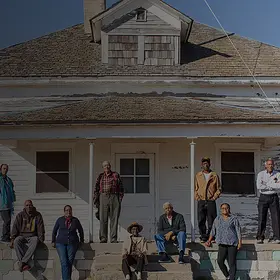
The town of Wickenburg was settled by its namesake, as well as others who turned the cluster of small structures into a thriving town.  Today its population of 6,700 includes descendants of these first residents and the Vulture's first workers, as well as enthusiastic newcomers. And if there's one thing that ties them all together, it's pride in their contribution to the history of Arizona and the West.

People flock to Wickenburg today to enjoy its balmy winter weather and stunning desert scenery, and they also find their way to the Vulture Mine, which has been open to visitors for over forty years. But today this site, which was such a powerful force in the development of the West, and the integration of many peoples into a thriving community, is in peril. Weather and decades of neglect are taking their toll, and the buildings are slowly being reclaimed by the desert. If the Vulture dies, a part of Wickenburg goes with it.

Concerned local citizens formed the Vulture Mine Preservation and Restoration Association in 2009 to raise money to rescue this western treasure. The VMPRA's goal is to save as many buildings as possible, and tell the Vulture's story through on-site interpretive materials, interactive displays and programs. These will be designed for adults and students; for the people of Wickenburg, and for the many who make return visits to town.

In 2013 the Vulture Mine will be 150 years old. If only its ghost remains, then a vital part of American history - a part that teaches us about industry and cooperation, with a touch of the wild West - will be forever gone. Without it, future generations of Wickenburg residents and guests will never know just how fascinating, or how important, history can be. 

The information provided on Community Challenge pages is provided "as is," and the National Trust for Historic Preservation does not make any representations, endorsements, or warranties (either expressed or implied) on any comments, reviews, or suggestions posted. Neither does the National Trust assume responsibility or liability for the same.