What You Can Do

Give $11 to help support the 11 Most Endangered Places.

11 Most Endangered

Historic Structures in Mark Twain National Forest

Year Listed: 2007
Location: , Missouri
Current Status: Endangered
Threat: Development, Poor Public Policy

Historic
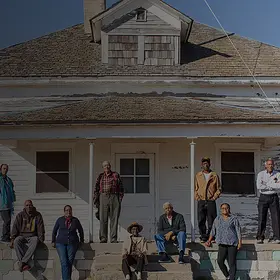
Ava Ranger Station in Mark Twain National Forest, Ava, Missouri. Mark Twain National Forest was on the 2007 list of America's 11 Most Endangered Historic Places.

Credit: National Trust for Historic Preservation

Significance

Established by President Franklin D. Roosevelt in 1939, the 1.5-million-acre Mark Twain National Forest is known for rocky bluffs, pastoral views and historical sites which speak to the region's rich heritage - from intact 19th-century frontier farmsteads to New Deal-era fire lookouts and ranger stations.  The Civilian Conservation Corps (CCC) was created by President Franklin D. Roosevelt to employ thousands of men who were affected by the Great Depression. In the area that would later become the Mark Twain National Forest, hundreds of young men at over 50 CCC sites worked to build roads, construct ranger stations and fire lookouts and plant numerous acres of pine to preserve and enhance the natural beauty of southern Missouri.

Updates

March 2010:  The National Trust for Historic Preservation continues to work with Mark Twain National Forest to find alternatives to demolition of its historic structures. As part of a Programmatic Agreement with the Missouri State Historic Preservation Office and the National Trust, Mark Twain National Forest has contracted with a Forest Service Enterprise Team to complete assessments of five properties and create marketing materials to offer them for rehabilitation or sale. Along with our Statewide Partner, Missouri Preservation, the National Trust has provided feedback on the marketing materials, reached out to individuals and groups interested in the historic properties, and provided technical assistance to potential applicants. The National Trust worked with the Forest and partners to review the letters of interest, and several applicants have now been asked to develop full reuse proposals.  We are encouraged by the interest generated through the solicitation and the potential new partners that have stepped forward, and will continue to work with the Forest and partners to support preservation-sensitive reuses for these historic properties. 

October 2008: The National Trust joined Forest Service staff, Passport in Time and Mennonite Church volunteers and staff from the Missouri Alliance for Preservation, at the Sinking Creek Lookout complex in Missouri's Mark Twain National Forest for a week of hands-on preservation work.  The beautiful fall weather was cooperative as scores of happy volunteer laborers descended on the picturesque site near Van Buren, Missouri.

The complex, built by the Civilian Conservation Corps (CCC), includes a fire lookout tower, a tower man's residence, a garage and outhouse.  The week included a large number of projects included scraping and painting all of the structures, removing and replacing roofing, repairing the porch on the residence, installing a handicap ramp, and rewiring the residence to name just a few!   Interesting discoveries included a number of old children's toys in the walls, a CCC-issued bottle of Listerine, and inscriptions from CCC workers on kitchen drawers.

The project marked some "firsts" for the Forest – the first time a Passport in Time crew had worked on historic buildings at Mark Twain and the opportunity for the Forest's first recreational rental facility.  The goal is for the Sinking Creek complex, which is located on the Ozark Trail, to be available as a rental property, catering to hikers and recreational enthusiasts.  

April 2007: The National Trust for Historic Preservation awarded the Mark Twain National Forest a grant from the Daniel K. Thorne Preservation Fund.  The grant was used to fund a feasibility study for five key historic properties in the Forest, including detailed plans and cost estimates.  The feasibility study will aid the Forest with planning for these endangered historic resources and encourage preservation of these significant properties.

Due to U.S. Forest Service budget limitations, many properties are vacant, unsecured, deteriorating and threatened with demolition.  The Forest's Facilities Master Plan, developed in 2005 without public involvement or consultation with the Missouri State Historic Preservation Office, demonstrates a clear preference for new construction over retention of existing historic structures, contrary to several federal mandates. Historic significance is not even listed among the criteria by which the Forest evaluated facilities during the planning process. As a result, implementation of the Plan may lead to the demolition or disposal of up to 70 historic structures on the Forest, and the lack of Forest Service funding for cultural resource stewardship makes reuse and retention difficult.

Share your memories of this endangered place

Nickname
Comment
Enter this word: Change

Submitted by yugsub at: March 9, 2010
seems like a nice place, it's always a pity when conservation becomes a victim of "progress ". surly there is room for both, one complementing the other! conservation has taken a big step here in australia with the change of government, now perhaps with the demise of the bush government, you might have a hope of rebuilding the community spirit, and go forward without the need for destruction of your heritage, and the ruin of a very important history. There are still pockets of "freedommm republicans" out there but, thank god, they are few and far between, and a dying breed, lets face it, even the 'ol cowboy rides on the odd tracktor',right? good luck, and may your god be with you!

Powered by Convio
nonprofit software