11 Most Endangered
Sumner Elementary School
Year Listed: 2008
Location: Topeka, Kansas
Current Status: Endangered
Threat: Deterioration, Neglect
Sumner Elementary School
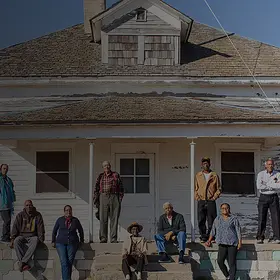
The dilapidated front entrance of Sumner School. Photo by Amy Cole.
Sumner Elementary School
Sumner Elementary School. Photo by Amy Cole.
Sumner Elementary School
Unique light fixture in foyer. Photo by Janine Joslin, Kansas Preservation Alliance, Inc.
Sumner Elementary School, a National Historic Landmark that helped launch the nation's Civil Rights Movement as one of the schools at the center of the U.S. Supreme Court's (1954) ruling in Brown v. Board of Education, presently sits in a deteriorated and threatened state. Vacant since 1996, the school suffers from deferred maintenance and has sustained significant damage from water infiltration, neglect and vandalism. As current problems remain unaddressed and damage worsens, this national icon is being allowed to deteriorate even further and resources have not been allocated to stem this tide.
What you can do
- Petition the City of Topeka to save the Sumner School by fulfilling their stewardship responsibilities.
- Learn more about the history of Sumner School and civil rights history at Topeka's Brown v. Board of Education National Historic Site.
- Help save Sumner Elementary and other endangered places – donate to the 11 for the 11 Most Challenge.
In 2002, the city of Topeka purchased Sumner Elementary with funding from the State Historic Preservation Office. As part of the acquisition, the city signed a covenant, which expires in 2012, that prevents demolition, and requires the city to maintain and protect the building, with the goal of finding a reuse for the facility. Unfortunately, limited resources – the majority of the $7,900 annually allotted to the building's upkeep is spent on mowing the lawn – and failure to secure a developer have prevented the city from implementing an effective strategy to safeguard the school. As a result, the Topeka City Council authorized staff in June 2007 to take the initial steps toward destroying the school. The city's failure to protect the site and its subsequent proposal to demolish it violate the covenant.
A campaign has been launched to secure a developer who could purchase the school from the city and rehabilitate it for a new use without compromising its historic character. This initiative is appealing to both private and public funding sources while raising awareness about the national significance of the historic site.
"Losing Sumner Elementary School to neglect is utterly unacceptable," says Richard Moe, president of the National Trust for Historic Preservation. "It represents a significant chapter in American history and powerfully symbolizes the struggle for equal educational opportunities in this country. We must protect the legacy of Sumner Elementary and provide the conscientious stewardship it needs and deserves."
Built for white students in 1936, Sumner Elementary became a pivotal catalyst for the Civil Rights Movement, when the School Board refused to admit Linda Brown, an African-American student. Although the school was only seven blocks from her home, Brown was forced to either walk one mile across a railroad switchyard or travel for more than an hour by an unreliable bus service to attend the all-black Monroe Elementary School. In 1954, the NAACP took her complaint to the Supreme Court and made history when the case—Brown v. Board of Education—struck down the "separate but equal" doctrine and mandated that all schools be desegregated.
In 1987, the National Park Service designated both Sumner and Monroe Elementary Schools National Historic Landmarks. Since Sumner was still in active use at the time, Monroe Elementary was selected to house the Brown v. Board of Education National Historic Site where visitors could learn about the landmark case and its broader contribution to the Civil Rights Movement.
For Press inquiries: http://press.nationaltrust.org/
Update
The latest coverage on the City of Topeka's plan for Sumner Elementary can be found here.