11 Most Endangered
The Lower East Side
Year Listed: 2008
Location: New York, New York
Current Status: Endangered
Threat: Development
The Lower East Side of New York City
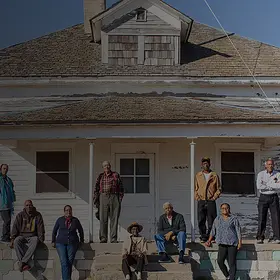
Demolished buildings have left large gaps in the fabric of this community. Photo by Kate Stober, Lower East Side Tenement Museum.
The Lower East Side of New York City
New construction on the Lower East Side. Photo by Kate Stober, Lower East Side Tenement Museum.
The Lower East Side of New York City
The Lower East Side Tenement Museum. Photo by Greg Scaffidi.
Few places in America can boast such a rich tapestry of history, culture and architecture as New York's Lower East Side. However, this legendary neighborhood—the first home for waves of immigrants since the 18th century—is now undergoing rapid development. New hotels and condominium towers are being erected across the area, looming large over the original tenement streetscape. As this building trend shows no sign of abating, it threatens to erode the fabric of the community and wipe away the collective memory of generations of immigrant families.
What you can do
- Share the story of your family who entered the country through Ellis Island and settled in NYC.
- If you are a resident of New York City, tell Chairman Tierney of the New York City Landmarks Preservation Commission that you support the designation of the proposed Lower East Side Historic District.
- Help save the Lower East Side and other endangered places – donate to the 11 for the 11 Most Challenge.
Although the Lower East Side was placed on the National and State Registers of Historic Places in 2000, such a designation functions primarily as an "honor roll" and does not preserve a neighborhood's appearance or regulate real estate speculation. The community, with little recourse for protection, is reeling from the recent destruction of its cultural heritage, including the defacing of several historic structures and the loss of First Roumanian Synagogue. Slapdash and haphazard renovations have led to the destruction of architectural detail, while modern additions to historic buildings sharply contrast with the neighborhood's scale and character. In 2007, permits were approved for the full demolition of 11 buildings on the Lower East Side, compared with just one in 2006. These developments, among others, signify the quickening erasure of the neighborhood's architectural and socio-cultural fabric.
The Lower East Side Preservation Coalition, comprised of nine community organizations, formed in 2006 to create a landmark district that would protect the physical character of the neighborhood and its history of the immigrant experience. The proposed District encompasses an area bounded on the west by Allen Street, with an extension that includes Broome Street west to Eldridge Street, on the north by Delancey Street, on the East by Essex Street, and on the South by Division Street, with an extension that includes Eldridge below Canal Street. The Coalition has garnered significant support from politicians, members of the Lower East Side community and diverse ethnic groups throughout New York.
"The Lower East Side is truly an irreplaceable area that speaks to one of the most powerful narratives in American history," says Richard Moe, president of The National Trust for Historic Preservation. "Should the streetscape be radically altered by out-of-scale development, we will forever lose the neighborhood's cultural context as well as its dynamic spirit."
A melting pot of cultures and nationalities, the Lower East Side remains central to the social history of the United States. Its preservation of 19th and early 20th century properties convey the story of immigrant home, health, entrepreneurship, labor, education and recreational life in New York City. Sites include pre-law and old-law Italianate, Beaux-Arts, Queen Anne and Neo-Grec tenements as well as federal row houses; the Good Samaritan Dispensary, a turn-of-the-last century clinic for Lower East Side immigrants; commercial buildings such the former Ridley's Department Store; religious properties such as Eldridge Street Synagogue and Kehila Kedosha Janina; residential properties such as the tenement at 97 Orchard Street, now the site of the Lower East Side Tenement Museum, a National Trust Historic Site; recreational sites such as the Loew's Theater designed by Thomas Lamb; and educational institutions such as Public School 42 and Seward Park High School.
"The story of much of New York City's immigrant history can be told through the tenements, houses of worship and commercial buildings erected on the Lower East Side in the late 19th and early 20th centuries," said Kate Daly, Executive Director of the New York City Landmarks Preservation Commission. "In recognition of the significance of this area to the history of our City and nation, to date the Landmarks Commission has designated 25 individual landmarks in the neighborhood, and recently surveyed more than 2,300 buildings, identifying numerous potential historic districts and individual landmarks. We're hopeful the National Trust's listing and the Lower East Side Preservation Coalition's efforts will generate even more support for the preservation of this historic neighborhood."
Read Lower East Side Preservation Coalition Executive Director Katy Daly's remarks.
For Press inquiries: http://press.nationaltrust.org/


Submitted by ElegantBallerina at: June 23, 2008
I grew up on the Lower East Side. I went to P.S. 91, JHS 65 and Seward Park HS. I remember the Greek and Turkish Coffee Houses on Allen Street and I still attend the Greek Synagogue on Broome Street. I am glad they have started to redo the Essex Street market but most of Orchard Street is lost. Some of my friends moved back there after many years away but it has become too expensive and has lost much of the charm and warmth of the immigrant poplulation.
Submitted by LES Lady at: June 15, 2008
Are you a resident of the Lower East Side/East Village? Do you have opinions about the recent changes to the area and/or future changes to the area, public schools, development, historic primacy, neighborhood businesses, public transportation, and more? Good Old Lower East Side (GOLES) has undertaken a broad and comprehensive community assessment and we need your opinions to make it happen. Consider yourself opinionated? Prove it! Fill out our L.E.S. community assessment survey online @ http://survey.dev.mayfirst.org/index.php?sid=48764&lang=en GOOD OLD LOWER EAST SIDE Serving the community since 1977 As a neighborhood housing and preservation organization, GOLES is dedicated to tenants' rights, homelessness prevention and community revitalization.
Submitted by HH at: May 21, 2008
The history of the United States of America is the history of development. Either, it be from Jamestown or Seattle. What is important is that we do not forget perservation with development. After, all what more the two centuries have been ecoed : is that "the experiement" [became] and is a living witness of the greatness of our nation. We must do our best at every level in contributing our self and conscience in perserving America. My tributes to the Management and Staff for striving to perserve our "national trust". Let no one distrust this. God bless America, our Ccountry and our Nation.
Submitted by Lokki at: May 21, 2008
Save NYC history Save the Lower East Side Skyscrapers in Mid-town only! Don't turn Lower East Side into a business district We need building codes and TASTE!!!!
Submitted by kmc at: May 20, 2008
Fred, Never say never. You believe. You fight. You make it happen.
Submitted by fred at: May 20, 2008
My mother was born in that area--hester Street--and I have visited it a few times. It is now upscaling, and getting (oddly) a number of those who left for Jersey moving back. NY is nothing if not change, and to try to freeze blocks and blocks that have had histrical interest is just not going to take place in an area where property is so valuable for building, rentals, and condos. People complain when an inner city place ils gentrified, and that is understandable but will take place, nol matter what, in a capitalist society, where money is so central to planning and what gets and does not get done. Dare I note that though I too get nostalgic about areas such as this, it is easy for me to do: I live comfortably elsewhere.
Submitted by kmc at: May 20, 2008
This isn't good enough. The LES includes the East Village and Alphabet City. And don't use a cop out like "people don't call those areas the Lower East Side any more." It's very much the LES. Real New Yorkers that care about the community know that. Please do what you can to increase the area of preservation to include the area above East Houston to 14th Street.