Carroll School
Rock Hill, South Carolina
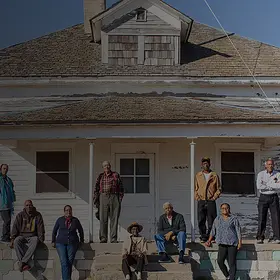
Carroll School, built in 1929, became the auspicious candidate of Rock Hill School District Three's effort to restore and save one of their communities Rosenwald Schools. How did this small group of local people take on this difficult project and succeed?
The determination of a committee of teachers and a well crafted plan for securing funding are what fueled this project. The group established three objectives to 1) restore the 1929 three teacher Rosenwald Schoolhouse; 2) create a fifth grade unit of study in which students would visit the Rosenwald School on a rotating schedule to learn about the effects of the Great Depression in their community and to 3) preserve the oral and physical history of the African American community before it was lost.
The doors of Carroll School were closed in 1954 and since then the school was used for community and church activities. The school needed a great deal of rehabilitation. All of the doors, the roof and windows were replaced with appropriate materials and styles. The wooden floors were refinished and the entire school painted on the inside and outside.
More expensive undertakings consisted of a new well, handicap accessible entrance and removal of a bathroom that had been added inside over the years. A separate addition of an exterior bathroom facility was built. Additional work to the exterior included landscaping and parking refurbishment.
Use of this building was as well planned as the renovation. Since 2001 the school district wanted to restore one of the remaining Rosenwald Schools to use for field study visits for 5th graders. The Rosenwald School history is a perfect way to convey the Depression Era of history to students. Because this type of study is inquiry –based and has proven effective as a means of learning, it seemed most appropriate for use with the Rosenwald School. The field studies aspect enhances the curriculum outside the classroom. This 5th grade program builds on the 3rd grade field study of an 1840's schoolhouse and a 4th grade curriculum for Native Americans. The School continues to be used for church and community events.
Rock Hill School District Three worked with preservation partners in the area including the South Carolina State Historic Preservation Office, Catawba Regional Council, the York Community Foundation, York County Culture and Heritage Commission and Rural Initiative Project. Queenie Hall, the coordinator for the Carroll School Project stated, "The collaboration with preservation partners and other community nonprofits was beneficial as we developed a plan and worked towards raising money to rehabilitate the Carroll School. I couldn't have gotten the initiative off the ground without the School Board and Superintendent."
As for fundraising, the school corporation was able to provide the labor for the initial repairs and hire an architect for future development. The District's Foundation also provided a grant as did the National Trust for Historic Preservation and the State Humanities Council. "Every chance I had an audience, I presented the Carroll School Project. I wrote endless grants and contacted local and state level community members but had no success. However, it was important for members of the community to understand what we were trying to do."
This project truly benefits the students of Rock Hill and the surrounding community. According to Hall the Carroll School project was one the most important things she has ever done.